7 Best Attendance Management Systems for Indian Businesses
Seven platforms reviewed so Indian HR teams can match workforce type, state footprint, and compliance obligations to the right attendance system before signing a contract.
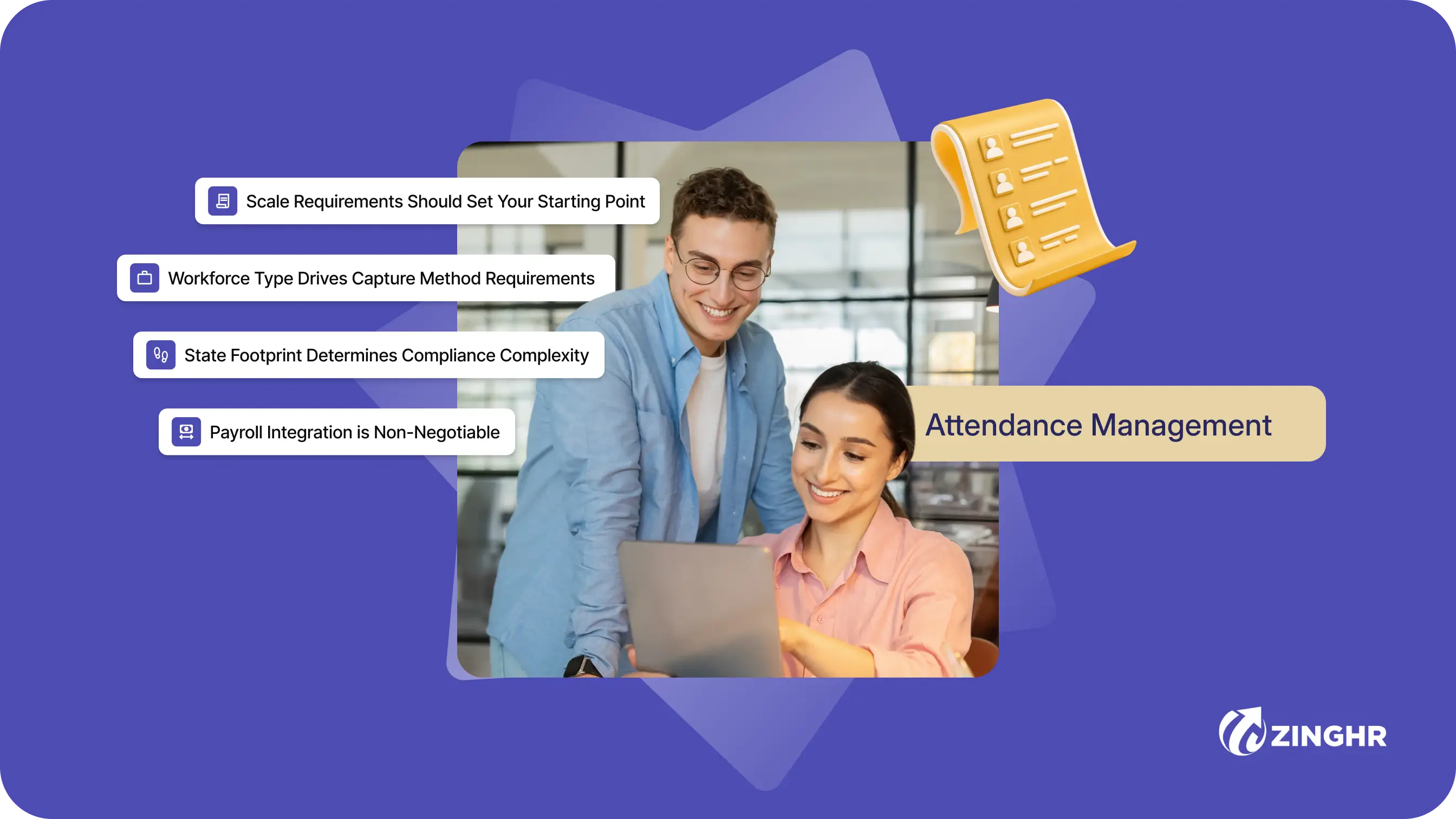
Table of contents
One unstitched HR platform to manage your entire workforce, from hire to rehire.
Talent Management solutions built for growing and exceptional people
Built-in compliance tools that update with changing regulations
Automated payroll, attendance, and leave management
Insights that help HR leaders make faster, better decisions

Key Takeaways
- ZingHR is the top pick for enterprises with 500+ employees. Geo-fenced mobile attendance, face recognition with 95% accuracy, and a zero-touch payroll sync run from one command centre.
- We reviewed seven India-first platforms on attendance capture accuracy, payroll integration depth, compliance readiness, and shift management.
- Indian businesses deal with multi-state labour laws, rotating factory shifts, distributed field forces, and contract labour whose pay depends entirely on daily attendance records.
- A reliable attendance management system converts that operational complexity into audit-ready data.
Indian businesses operate some of the most fragmented workforce scenarios anywhere: factory workers on rotating shifts, field sales teams spread across dozens of cities, contract labour governed by state-specific rules, and office employees demanding mobile-first self-service. Manual attendance registers collapse under this complexity.
A missed punch becomes a payroll dispute. Recurring proxy attendance silently inflates labour costs. Disputed overtime reaches the CFO's desk weeks after the fact.
An attendance management system converts daily clock-ins into verified, structured data that feeds payroll, compliance, and workforce planning in real time. For Indian businesses, the compliance stakes are especially sharp. Overtime thresholds under the Factories Act, leave entitlements under the Shops and Establishments Act, and PF/ESI contributions tied to actual working days all depend on attendance records being accurate and audit-ready.
This guide covers seven platforms evaluated against the four dimensions that determine whether an attendance management system works for Indian operational realities.
How We Evaluated These 7 Tools
Our evaluation drew from platform documentation, user reviews on G2 and Capterra, and product demos. We focused on criteria that reflect how HR teams operate.
1. Attendance Capture Accuracy and Method Coverage
A qualifying platform supports multiple capture methods: biometric, face recognition, GPS-verified mobile, QR code, geo-fence, and web check-in. Platforms covering field workforces and factory floors alongside office employees work best.
2. Payroll Integration Depth
Attendance data that requires a manual export before payroll runs is a risk. We assessed whether working days, overtime, loss-of-pay, and comp-offs flow directly into the payroll engine without a separate reconciliation step.
Understanding how payroll automation works end-to-end makes clear why this integration separates capable platforms from basic trackers.
3. Compliance and Statutory Readiness
Factories Act overtime registers, state-wise holiday calendars, Shops and Establishments Act leave mapping, and statutory compliance in HR reporting are requirements, not optional features. Platforms generating these natively work better than those requiring manual compilation.
4. Shift and Roster Management
Multi-shift operations in Manufacturing, Retail, QSR, and Logistics need automated roster assignment, shift swap workflows, and overtime flag triggers. We assessed whether these are native capabilities or require third-party add-ons.
Quick Comparison: 7 Best Attendance Management Systems in India
As businesses move away from manual registers and spreadsheets, attendance management software has become an essential part of modern HR operations. The following solutions stand out:
Seven India-first attendance management platforms compared by target segment, capture methods, and trial availability.
1. ZingHR
Verdict: The strongest choice for enterprises managing multi-location, multi-shift, and contract workforces from one command centre. ZingHR's attendance management system captures, reconciles, and pushes payroll-ready data without a single manual step, backed by agentic intelligence built for GHROWTH.
ZingHR Key Attendance Features
ZingHR's attendance capability sits within a unified Workforce Management platform, where every attendance record connects directly to payroll and compliance:
- Face Recognition at 95% Accuracy: Detects multiple faces in one pass, eliminating buddy punching at factory gates, retail counters, and office entries.
- Geo-Fenced GPS Mobile Attendance: Employees punch in from pre-approved locations only. Co-ordinates are captured with every entry, giving field teams a hardware-free check-in method.
- Automated Shift Scheduling and Roster Management: Shifts are configured by geography or season. AI-based demand forecasting assigns shifts automatically, auto-allocation fills gaps, and swap requests route through managers without email chains.
- Zero-Touch Attendance-to-Payroll: Working days, overtime, and loss-of-pay days flow directly into the payroll engine. There are no CSV exports or reconciliation calls required.
- Attendance Anomaly Detection via Agentic AI: Overtime spikes, repeated late arrivals, and location mismatches surface before they affect payroll or trigger a compliance flag.
- Statutory Register Generation: Factories Act and Shops and Establishments Act registers generate automatically, cutting audit preparation from days to a scheduled export.
- Leave Management: Employees apply for leaves, track balances, and get approvals through a self-service portal. Leave data syncs directly with attendance and payroll, ensuring accurate loss-of-pay and carry-forward calculations across all establishment types.
- Contract Labour Management: It tracks attendance and compliance for contract workforces under CLRA obligations. Principal employer dashboards give visibility into contractor headcount, working days, and statutory contributions without manual data chasing.
ZingHR Pros
- Widest capture method coverage across biometric, face recognition, geo-fencing, QR code, and web, serving every workforce type from factory floor to remote field force.
- Native payroll integration eliminates reconciliation between attendance and salary calculations entirely.
- Board-level absenteeism and overtime cost analytics through the Zing Intelligence Hub.
ZingHR Cons
- Built for enterprise scale. Teams under 100 employees will find more capability than they need immediately.
- Multi-location geo-fence boundaries and shift hierarchies require structured configuration during onboarding.
ZingHR is Best For
Enterprises with 1,000+ employees across Manufacturing, BFSI, Retail & QSR, Pharma, Logistics, and Healthcare where attendance data must feed payroll and workforce management without manual intervention. Any organisation managing contract labour, multi-shift operations, or field workforces at scale belongs here.
ZingHR Pricing
Quote-based, scaled to headcount and module selection. Book a demo for a pricing walkthrough specific to your location footprint.
2. Darwinbox
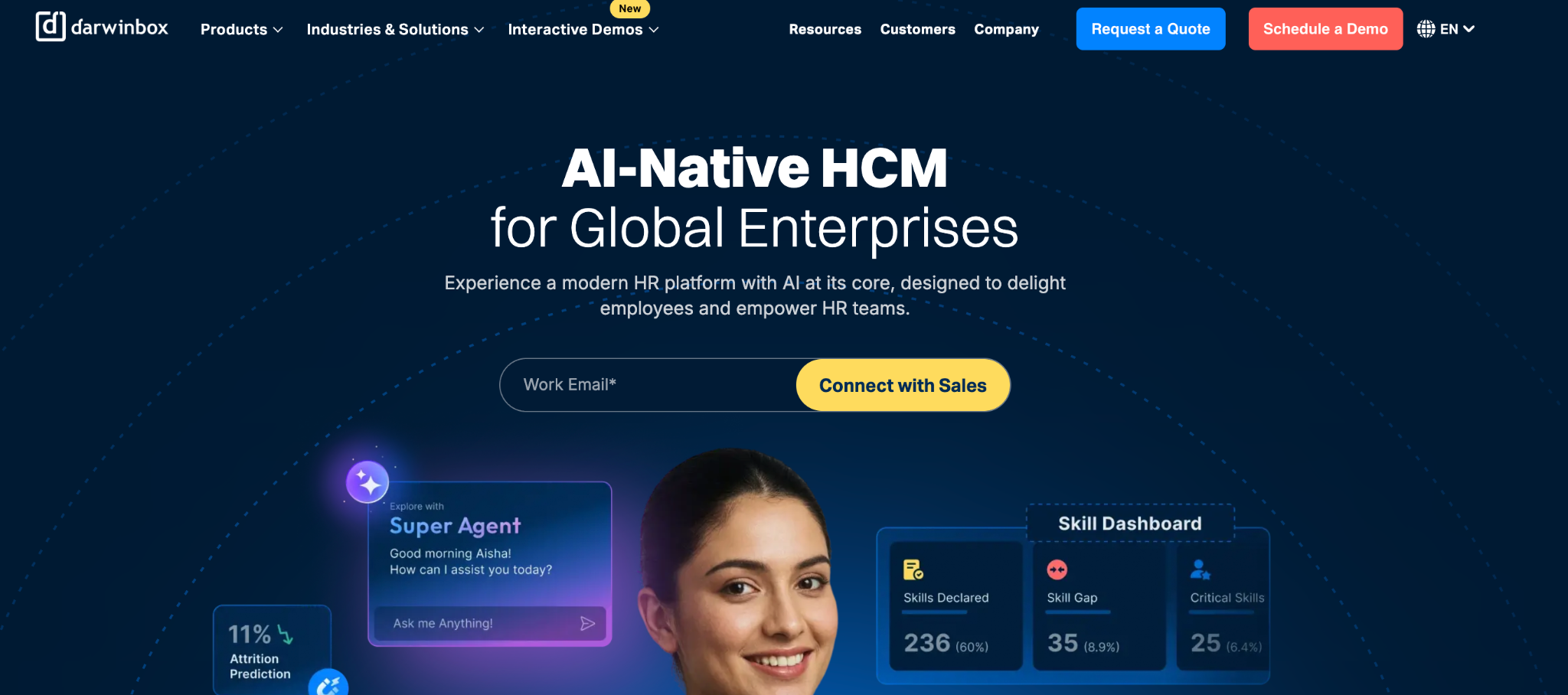
Verdict: An India-built enterprise HRMS with solid AI-based attendance capture and workflow-driven leave management. Best suited for mid-market and enterprise deployments in IT/ITes and professional services where biometric hardware is impractical.
Darwinbox Key Attendance Features
- AI-Based Facial Recognition: Contactless check-in at office entry points with liveness detection to prevent photo spoofing.
- Mobile GPS Attendance: Field and remote employees mark attendance with GPS-verified mobile punch-ins. Managers view location data on a single attendance dashboard.
- Smart Roster Optimisation: AI suggests shift assignments based on availability and historical patterns. Managers review and approve rather than build schedules from scratch.
- Leave-Attendance Integration: Approved leaves, comp-offs, and state-wise holiday calendars update attendance records automatically at period close.
Darwinbox Pros
- Modern interface with strong adoption among mid-market HR teams in tech-forward organisations.
- Attendance and leave data integrate neatly across the broader HCM suite.
Darwinbox Cons
- Multi-state Professional Tax compliance and contract labour attendance tracking require configuration support.
- Enterprises operating in 10+ states have reported edge cases in shift and overtime calculations.
Darwinbox is Best For
Mid-market companies with 300–3,000 employees, particularly in IT/ITes, BFSI, and professional services with primarily office-based or hybrid workforces.
Darwinbox Pricing
Quote-based. Demo available on request through the Darwinbox website.
3. Keka HR
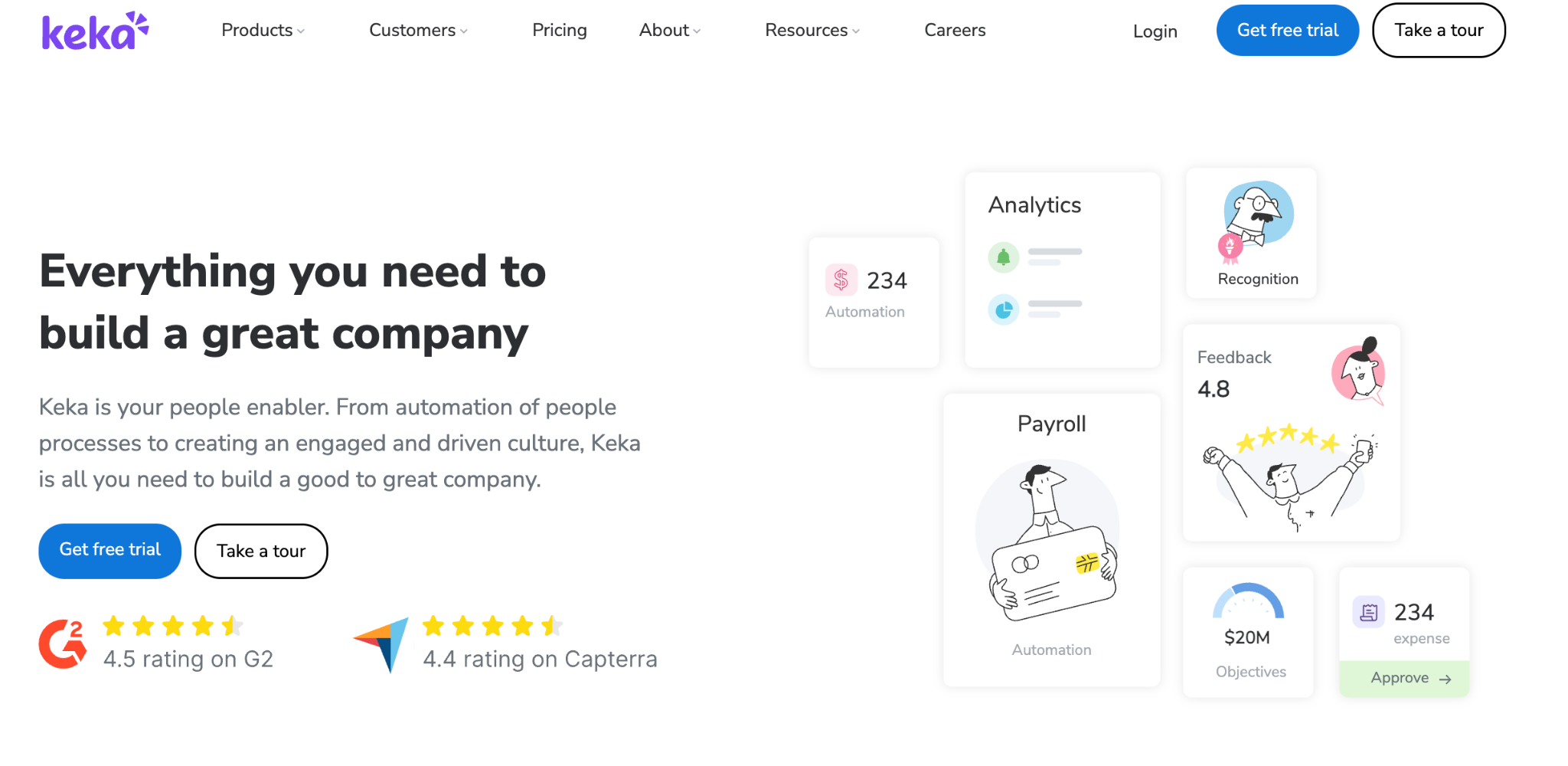
Verdict: The most accessible entry point for growing Indian companies needing payroll-linked, biometric-ready attendance tracking. Fast to deploy, clean to operate, and well-suited for teams scaling from 50 to 500 employees.
Keka HR Key Attendance Features
- 200+ Biometric Device Integrations: Connects with most devices already installed in Indian offices without additional hardware procurement.
- Geo-Fence Mobile Attendance: Location-based check-in for field and remote employees with a mobile experience employees actually use.
- Flexible Shift Policies: Fixed, flexible, and rotational shifts are configurable. Overtime and comp-off rules apply automatically with no manual trigger.
- Payroll-Linked Attendance: Working hours, overtime, and loss-of-pay feed directly into Keka's payroll module. Salary processing starts from verified attendance data.
Keka HR Pros
- Deployment typically completes within 2 to 4 weeks for standard configurations.
- Clean interface that HR generalists and employees navigate without dedicated training.
Keka HR Cons
- Organisations operating in 5+ states encounter manual workarounds for edge cases in state-specific leave and overtime rules.
- Contract labour and Factories Act compliance registers sit outside the core feature scope.
Keka HR is Best For
Growing companies with 50-500 employees in IT/ITes, professional services, and light manufacturing operating in 1 to 3 states.
Keka HR Pricing
Quote-based, varying by module selection and employee count.
4. PeopleStrong
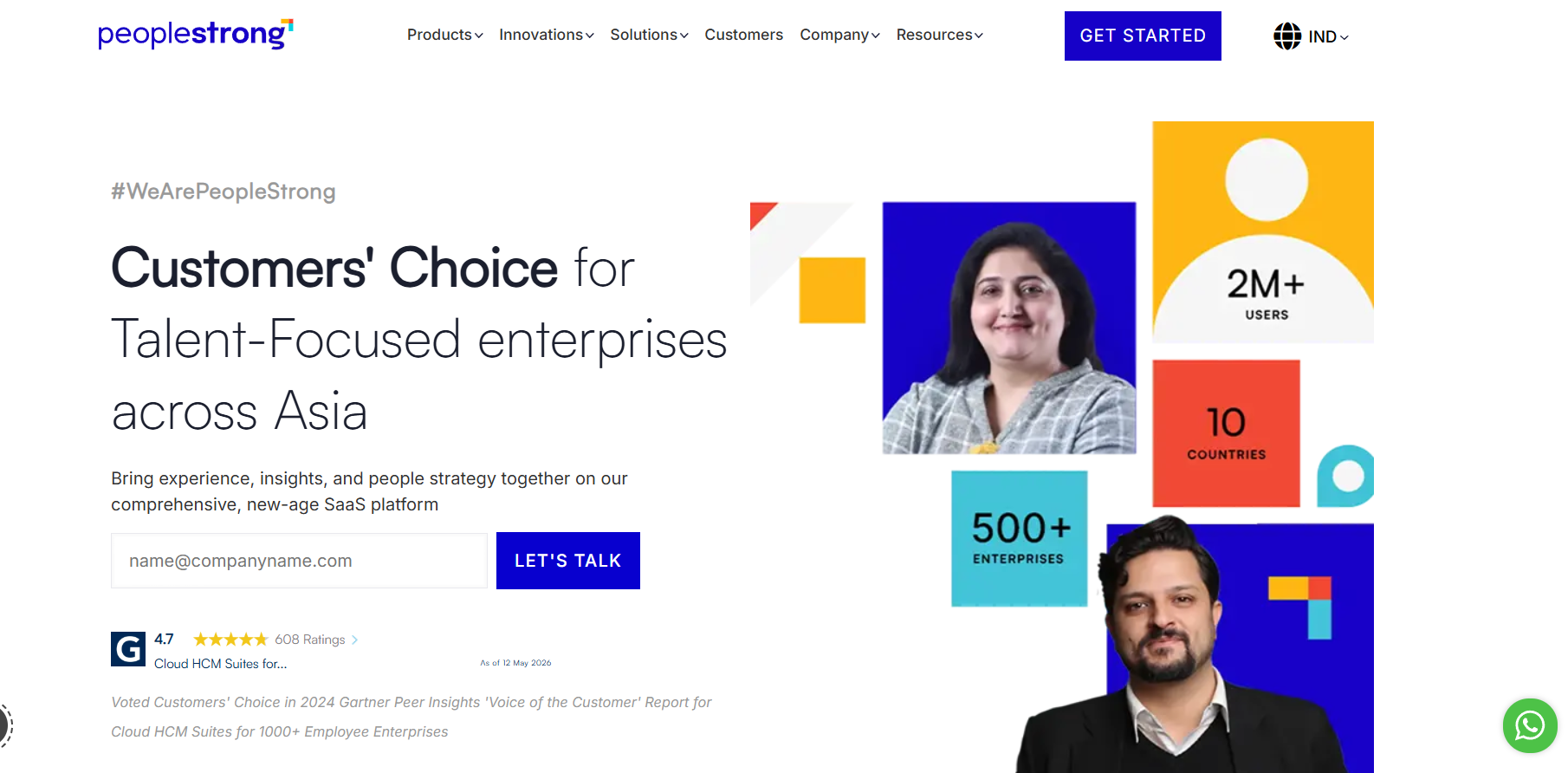
Verdict: A strong fit for workforce-heavy industries where time-and-attendance data must feed statutory reporting directly. Manufacturing, Retail, and Logistics enterprises gain the most from PeopleStrong's industry-configured attendance workflows.
PeopleStrong Key Attendance Features
- Attendance-to-Statutory Reporting Pipeline: Overtime and shift data feed directly into Factories Act and Shops and Establishments compliance reports. Attendance violations trigger alerts before they become audit exposure.
- Biometric and Kiosk Support: Multiple hardware options for blue-collar check-ins across factory floors and warehouse gates.
- Bulk Attendance Processing: Handles high-volume daily attendance data for organisations with 5,000 to 50,000 employees without performance degradation.
- Contract Labour Attendance Tracking: Basic CLRA compliance workflows are available for principal employer obligations on contract workforces.
PeopleStrong Pros
- Industry-specific attendance templates for Manufacturing and Retail reduce configuration time considerably.
- Sustains high-volume daily processing for large headcounts at consistent performance.
PeopleStrong Cons
- Interface complexity and a steeper learning curve compared to newer India-first platforms.
- New Labour Codes digital register generation remains at an earlier stage of development.
PeopleStrong is Best For
Enterprises with 2,000 to 50,000 employees in Manufacturing, Retail, QSR, and Logistics where shift compliance and Factories Act reporting are the primary attendance use cases.
PeopleStrong Pricing
Quote-based, scaled to employee count and module selection.
5. HROne
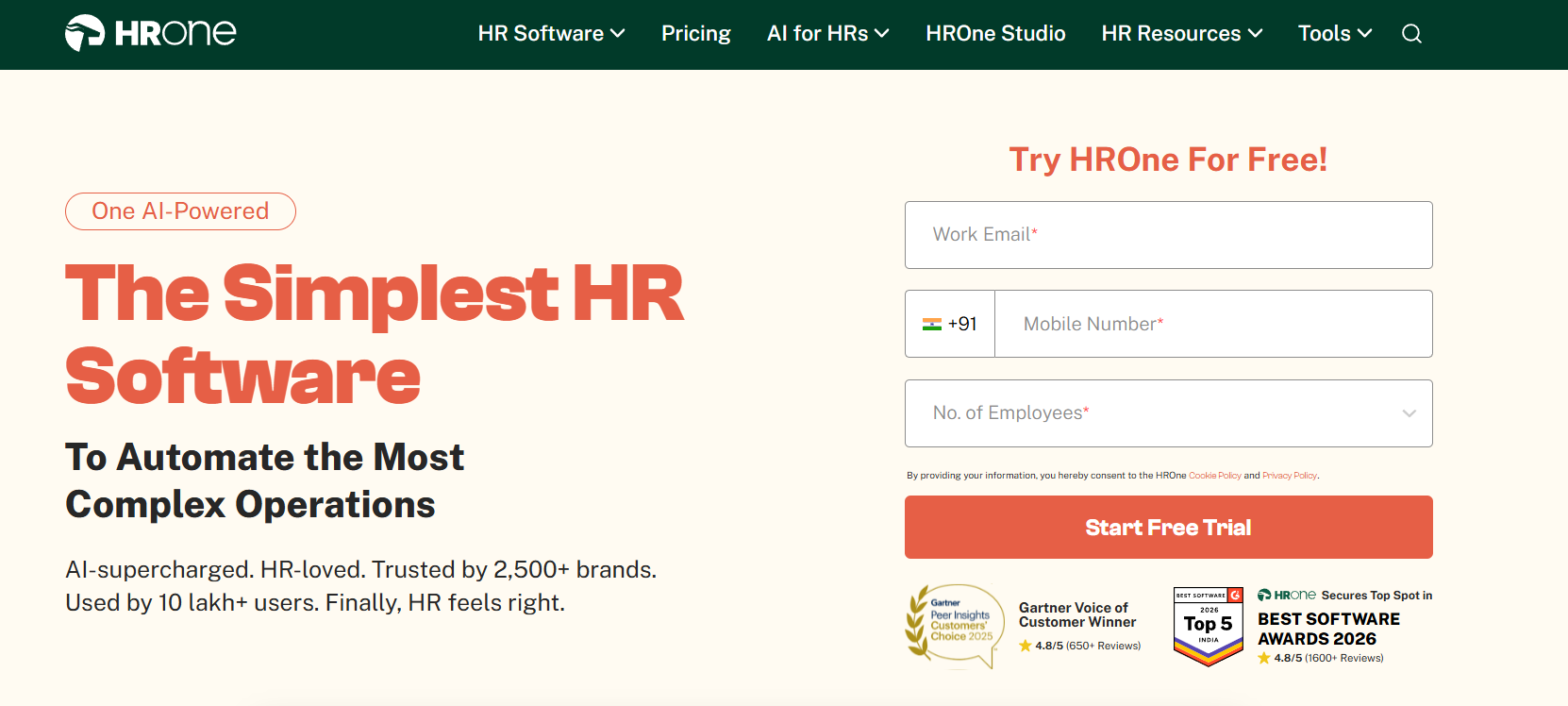
Verdict: An India-built HRMS that makes daily attendance straightforward for employees and HR alike. WhatsApp-based check-in, GPS tracking, and multi-mode capture give mid-market teams flexibility without hardware dependency.
HROne Key Attendance Features
- WhatsApp and Mobile Attendance: Employees mark attendance via WhatsApp, mobile app, or web. Approvals follow the same conversational interface managers already use daily.
- GPS and Geo-Fence Tracking: Location-verified attendance for field teams. Geo-boundaries are set by HR and applied automatically.
- AI-Powered Virtual Assistant: HROne AI responds to employee attendance queries, regularisation requests, and leave balance checks without HR team involvement.
- Auto Payroll Calculation: Attendance days, overtime hours, and loss-of-pay adjustments feed directly into payroll without a separate reconciliation step.
HROne Pros
- WhatsApp attendance is a practical differentiator for Indian mid-market organisations where employees are more comfortable on messaging apps than dedicated portals.
- Clean, configurable interface that adapts across industries.
HROne Cons
- Less suited to large enterprises with complex multi-location statutory compliance requirements.
- Advanced shift management for rotating rosters requires add-on configuration.
HROne is Best For
SMEs and mid-market companies with 50 to 1,000 employees in non-manufacturing industries where mobile-first attendance capture is the priority.
HROne Pricing
Pricing starts with the Basic plan at ₹4,950/month, followed by the Professional plan at ₹6,500/month, while enterprise customers can request customized pricing based on their requirements.
6. factoHR
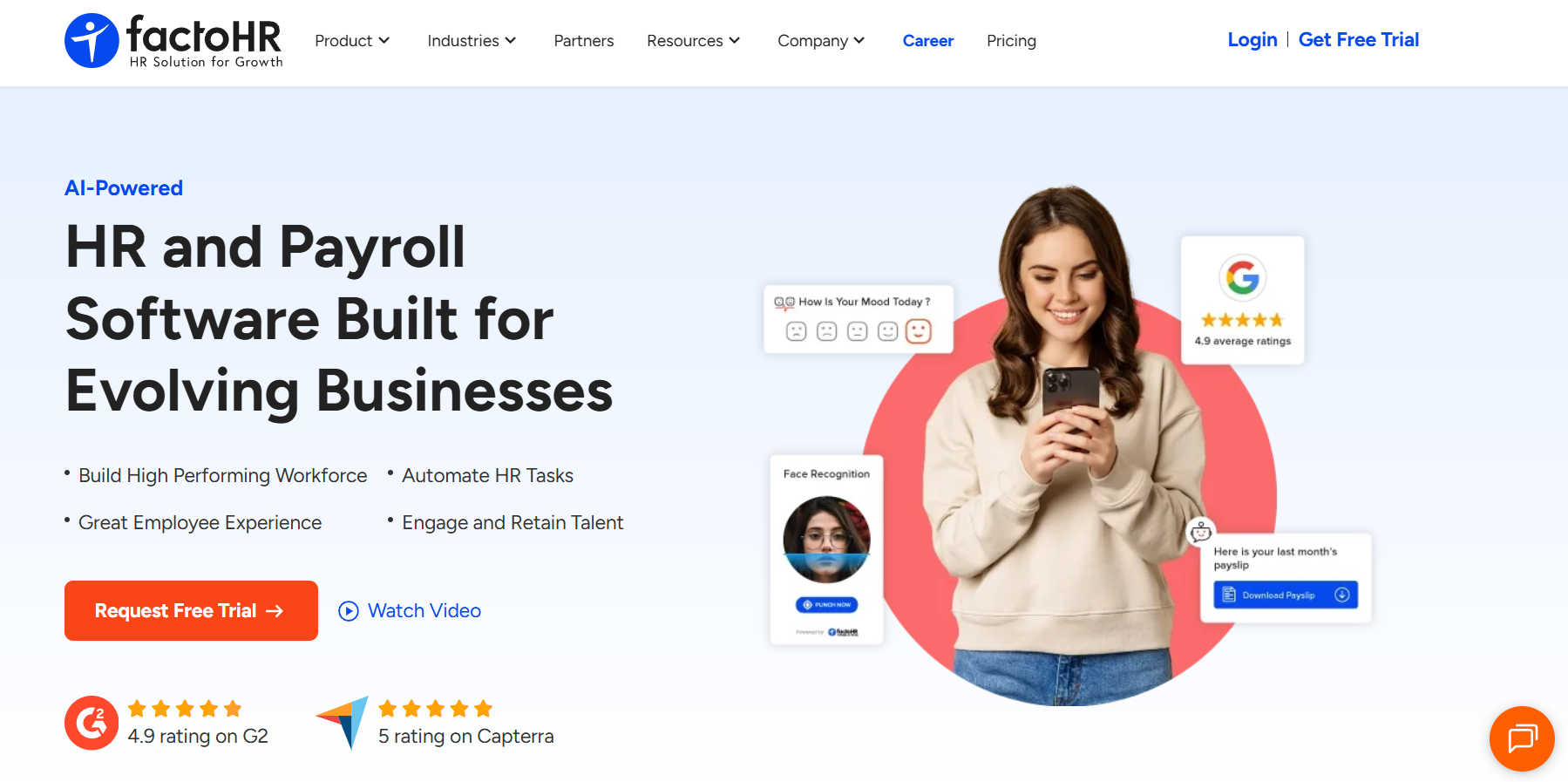
Verdict: A solid SME-focused attendance management system that handles multi-method capture, overtime calculation, and comp-off management without requiring a dedicated HR IT team.
factoHR Key Attendance Features
- Selfie-Based Mobile Attendance: Employees mark attendance with a selfie and GPS pin, eliminating proxy punching for field teams.
- WhatsApp Attendance Marking: Attendance workflows through WhatsApp for field-heavy teams who are already on mobile throughout the day.
- Automated Overtime and Comp-Off Calculation: Extra working hours calculate and convert to comp-off or overtime pay based on configured policies.
- Multi-Shift and Holiday Calendar Management: Shift patterns, weekly-off rules, and state-specific holiday calendars are configurable per establishment.
factoHR Pros
- Transparent, tiered pricing makes total cost of ownership clear before the sales conversation.
- Covers attendance, leave, and payroll integration in a single SME-accessible package.
factoHR Cons
- Compliance depth for CLRA and Factories Act registers is limited compared to enterprise platforms.
- Advanced analytics and AI-powered anomaly detection are not a core feature at standard tiers.
factoHR is Best For
Small and mid-sized businesses with 50 to 500 employees in trading, services, and light manufacturing with straightforward attendance requirements.
factoHR Pricing
The platform is free for organizations with up to 20 employees, while paid plans range from ₹4,999 to ₹6,999 per month for teams of up to 50 employees.
7. Zimyo
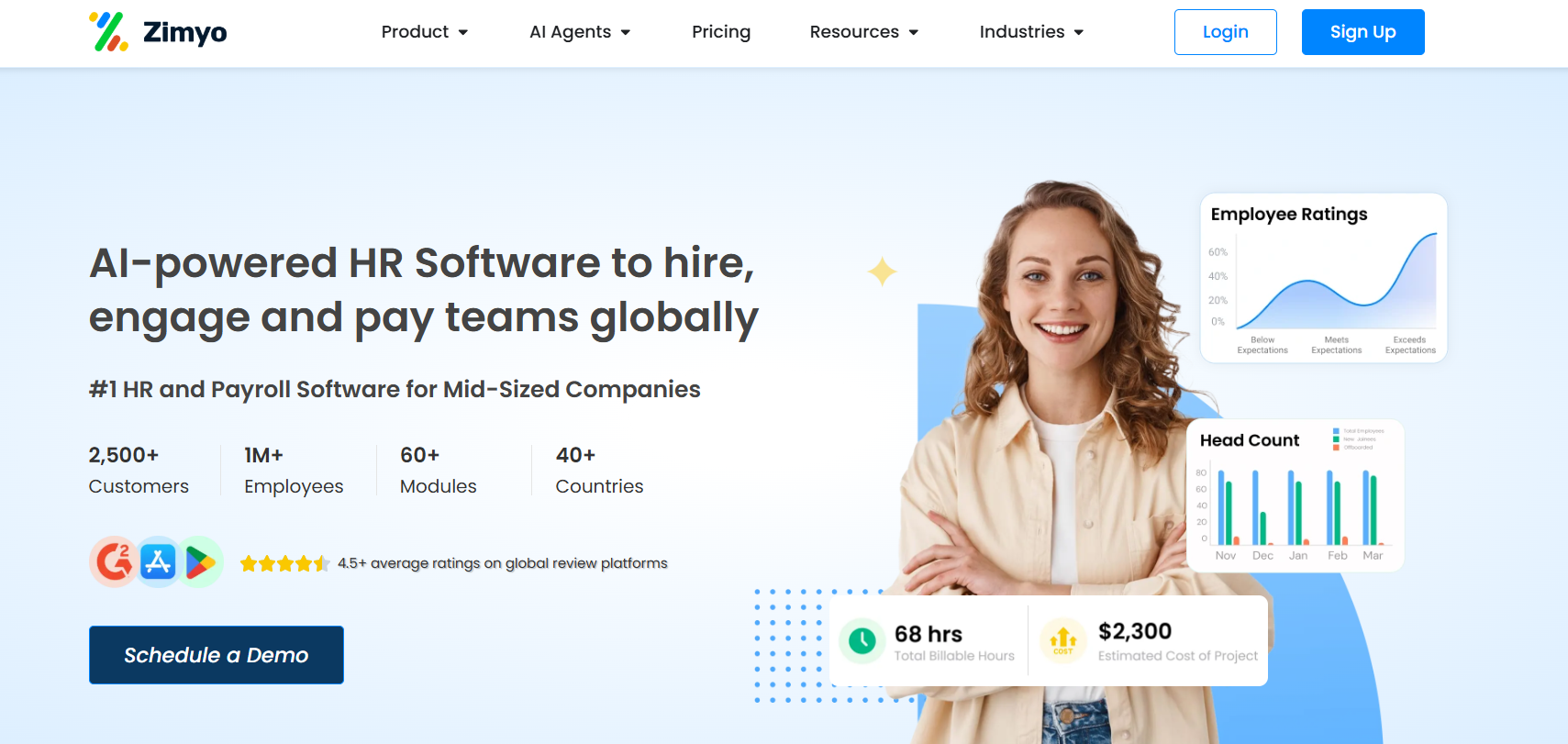
Verdict: A cloud-native HRMS built for Indian startups and SMEs that need clean attendance tracking, leave management, and payroll integration without a long implementation cycle. Strong on user experience and third-party integrations.
Zimyo Key Attendance Features
- Geo-Fence and Mobile Attendance: Location-restricted check-ins for remote and hybrid teams via mobile app.
- Biometric Device Integration: Connects with standard biometric hardware already present in Indian offices.
- Employee Self-Service Regularisation: Employees raise missed punch requests directly from the app. Manager approvals happen in one click.
- Leave and Attendance Integration: Approved leave and attendance data sync automatically before payroll is processed.
Zimyo Pros
- User-friendly interface with quick onboarding, ensuring ease of use by HR generalists.
- Attendance, leave, and employee engagement features sit within one accessible platform.
Zimyo Cons
- Customisation limits in reporting and payroll edge cases for companies with complex wage structures.
- Not designed for enterprises with 1,000+ employees or multi-state statutory complexity.
Zimyo is Best For
Startups and SMEs with up to 500 employees in IT, professional services, and D2C businesses looking for a fast, clean cloud HRMS.
Zimyo Pricing
The platform offers three pricing tiers: Basic at ₹80 per user/month, Standard at ₹120 per user/month, and Enterprise at ₹160 per user/month, with minimum monthly commitments of ₹4,000, ₹6,000, and ₹8,000 respectively.
How to Choose the Right Attendance Management System
No single platform fits every Indian business. The right attendance management system depends on headcount, workforce type, state footprint, and compliance obligations.
1. Workforce Type Drives Capture Method Requirements
Office and hybrid workforces need geo-fence and mobile check-in. Factory and warehouse floors need biometric devices or face recognition terminals. Field teams need GPS-verified mobile apps with offline capability.
A system designed for office workers will not handle a 2,000-person manufacturing plant, and sizing up to an enterprise platform when your team is 80 people adds unnecessary cost and complexity.
2. State Footprint Determines Compliance Complexity
Businesses operating in 1 to 3 states can manage with SME-focused tools. Organisations with 5+ state operations need platforms with native state-wise leave calendars, overtime rule mapping, and audit-ready statutory registers.
The labour law compliance checklist is a useful reference for mapping exactly what state-specific obligations require from your attendance data.
3. Payroll Integration is Non-Negotiable
If your attendance system and payroll system do not share a data layer, you are running manual reconciliation every month. Verify that working days, overtime, and loss-of-pay flow automatically into salary calculations before shortlisting any platform.
Standalone attendance trackers that export CSVs are not solutions for payroll-linked compliance.
4. Scale Requirements Should Set Your Starting Point
SMEs under 500 employees get the best return from Keka HR, HROne, factoHR, Zimyo, or Craze. Enterprises above 500 with multi-location or contract labour complexity need ZingHR, Darwinbox, or PeopleStrong.
Choosing above your current scale is costly. Choosing below it means migrating again in 18 months.
How ZingHR Handles Attendance Management
ZingHR treats attendance data as a governance input. Every punch feeds a chain of payroll, compliance, and analytics decisions, and the platform is built to make that chain automatic from capture to report.
1. Zero-Touch From Capture to Payroll
ZingHR's attendance engine eliminates every manual step between a clock-in and a payroll calculation. Biometric entries, geo-fenced mobile punches, and face recognition data all flow into the same payroll layer. Working days, overtime, and comp-offs apply without HR intervention.
The HR Launchpad is where this foundation gets set up, mapping your entire workforce structure before a single policy goes live.
2. Agentic Intelligence That Detects Before You Check
ZingHR's AI layer, powered by Ghrowth.ai, monitors attendance patterns continuously. Overtime spikes, irregular location check-ins, and repeated late arrivals surface as actionable alerts. Anomalies are flagged within the cycle, not after it.
3. Multi-Location Command Centre for Distributed Operations
Whether your workforce spans five cities or fifty plant locations, ZingHR's centralised dashboard gives plant heads, HR managers, and CHROs one real-time view of attendance across every establishment.
The Workforce Intelligence layer translates that data into absenteeism trends, overtime cost analytics, and shift efficiency metrics your leadership team can act on without pulling reports manually.
4. Compliance Built In
Factories Act registers, Shops and Establishments attendance records, and New Labour Codes digital registers generate automatically.
Compliance is a continuous output of the attendance management system, available on demand for any establishment and any date range. For businesses managing both workforce management and HR operations on one platform, this removes the biggest reconciliation gap most compliance teams face.
The Right Platform Starts With Your Operational Reality
Every platform in this guide solves a specific version of the attendance problem. SMEs with simple office setups and growing companies moving off spreadsheets have capable, affordable options in Keka HR, HROne, factoHR, Zimyo, and Craze.
Workforce-heavy industries with large field forces and factory operations are better served by PeopleStrong or Darwinbox. Enterprises managing multi-location, multi-shift, and contract workforces at scale with board-level compliance accountability need ZingHR.
The test is which system captures your attendance accurately, connects it to payroll without manual work, and produces the statutory records your compliance team needs, every month, without chasing.
Book a demo to see how ZingHR's attendance management system works across your establishment footprint.
Frequently asked questions (FAQs)
An attendance management system automates recording, monitoring, and managing employee attendance. Indian businesses need it to eliminate manual errors, prevent proxy punching, feed accurate data into payroll, and maintain compliance with labour laws including the Factories Act, Shops and Establishments Act, and Wage Code requirements.
The right attendance capture method depends on workforce type. Factory floors benefit from biometric or face recognition terminals. Field teams need GPS-verified mobile check-ins. Office and hybrid workforces work well with geo-fenced mobile or web attendance. Enterprise platforms like ZingHR support all methods from a single system.
A well-integrated attendance management system shares one data layer between attendance and payroll. Working days, overtime hours, loss-of-pay days, and comp-offs flow directly into salary calculations without manual export or reconciliation.
Yes. Enterprise-grade platforms generate attendance registers, overtime records, and weekly rest-day reports in formats required under the Factories Act. ZingHR produces these automatically for every establishment, making audit preparation a scheduled export rather than a manual exercise.
SME-focused tools like Keka HR, Zimyo, and Craze deploy in 2 to 4 weeks. Mid-market platforms like HROne and factoHR take 3 to 6 weeks. Enterprise deployments on ZingHR, Darwinbox, and PeopleStrong with multi-location geo-fencing and shift configuration typically run 6 to 12 weeks depending on establishment footprint.
What to do next?
See ZingHR in Action
Join the 1,200+ enterprises that have replaced fragmented HR with one intelligent, future-ready platform. See ZingHR in 30 minutes.
Build the Organization You Want
Great HR drives retention, capability, and culture. ZingHR takes care of the operational layer so your people team owns the strategy.

Elevating Impact.
Defining Destiny
See how ZingHR's AI-powered Hire-to-Retire platform frees your CPO to lead with purpose and deliver the outcomes your Board is watching for


ZingHR is the AI-powered Hire-to-ReHire platform built for one purpose to remove every transactional layer of HR from your organisation, permanently.