What is HRMS? Modules, Benefits and HRIS vs HCM
An HRMS runs payroll, attendance, leave and performance from one employee record. Nine core modules, a clear line between HRIS, HRMS and HCM, and the benefits Indian HR teams report


Table of contents
One unstitched HR platform to manage your entire workforce, from Hire to Re-Hire.
Talent Management solutions built for growing and exceptional people
Built-in compliance tools that update with changing regulations
Automated payroll, attendance, and leave management
Insights that help HR leaders make faster, better decisions

Key Takeaways
- HRMS stands for Human Resource Management System, a software platform that automates core HR processes across the entire employee lifecycle.
- Nine core modules cover core HR, payroll, attendance, leave, recruitment, performance, learning, engagement and analytics.
- In India, the payroll module has to handle PF, ESIC, Professional Tax and TDS across every state where the organisation employs people.
- Benefits show up in payroll accuracy, statutory compliance, reporting speed, employee self-service and time to hire.
- ZingHR runs 35+ in-house modules from Hire-to-ReHire, with Ghrowth.ai answering HR queries on WhatsApp and Microsoft Teams and ZingZeroTAP closing payroll across legal entities.
An HRMS holds employee records, runs payroll, tracks attendance and routes leave approvals. For Indian HR teams, it is the system payroll, finance and auditors rely on at month-end.
IMARC Group projects India's HRMS market to reach USD 4.3 billion by 2033, at a compound annual growth rate (CAGR) of 14.6%, as more organisations move core HR off spreadsheets and onto cloud platforms.
What is HRMS?
HRMS stands for Human Resource Management System. It is a software platform that automates core HR functions across the employee lifecycle, from hiring and onboarding to payroll, performance, learning, engagement and offboarding.
In practice, an HRMS replaces the spreadsheets, email approvals and paper forms HR ran on before it. Managers approve leave, employees download payslips and HR admins run payroll without switching between tools.
Modern HR platforms are cloud-based, which means updates apply automatically, statutory changes flow through the system, and access works from any device.
What is the Role of HRMS in HR Departments?
The role of HRMS is to give HR teams a single source of truth for employee data. Every downstream process reads from the same record. Payroll knows the latest salary, performance knows the latest role and compliance knows the latest state posting. The reconciliation work that used to consume days each month closes inside the system.
With reconciliation off the monthly calendar, HR teams get time back for retention, culture and workforce planning. Managers feel the same squeeze: Deloitte's 2025 Global Human Capital Trends report found they spend around 40% of their time on administrative work and only 13% developing their people. An HRMS that takes approvals and data entry off their desks gives some of that time back.
Also read: The Complete Guide to HR Software Implementation
What Are HRMS Tools? Core Modules Inside the Platform
An HRMS tool is any module inside the platform that handles a specific slice of HR work. A full HRMS bundles nine core modules:
- Core HR and employee database: Centralises employee records, org structure, job history and reporting lines. Every other module reads from this base.
- Payroll management: Automates salary calculations, statutory deductions and bank disbursement. In India, this layer handles Provident Fund (PF), Employees’ State Insurance Corporation (ESIC), Professional Tax (PT) and Tax Deducted at Source (TDS) across every state where the organisation operates.
- Attendance management: Captures clock-ins through biometric devices, geo-fenced phone check-ins, facial recognition or supervisor marking, and passes the data to payroll.
- Leave management: Runs multi-policy leave engines with accrual, encashment and comp-off auto-credit. Approvals flow through the system instead of over email.
- Recruitment and applicant tracking: Handles job postings, resume management, interview scheduling and offer roll-out. AI resume screening has shifted from a nice-to-have into a default.
- Performance management: Supports goal setting, continuous check-ins, 360-degree feedback and calibration. Ratings flow directly into compensation revisions.
- Learning and development: Delivers training content, tracks completions and maps learning to competencies. Auto-assigns courses when skill gaps show up.
- Employee engagement: Runs surveys, polls and recognition workflows. Feeds sentiment data back into workforce planning.
- Analytics and reporting: Turns HR data into dashboards for managers, HR business partners and leadership, covering headcount, attrition, cost per hire and pay equity.
Also read: What is Human Capital Management? Explained in Detail
HRIS vs HRMS vs HCM: What's the Difference?
HRIS, HRMS and HCM get used interchangeably, and the overlap is real. Scope is what separates them, including where strategic workforce planning sits.
HRIS, HRMS and HCM compared by scope and typical user
Indian cloud-based HRMS platforms now ship with HCM capabilities layered on top, so the distinction blurs at the buying stage. What matters is whether the platform runs payroll and lifecycle workflows natively, and whether it extends to talent, learning and analytics without a bolt-on integration.
Benefits of an HRMS
Five benefits show up once an HRMS is in daily use:
Five ways an HRMS changes the day-to-day for Indian HR teams
AI is now part of that comparison. Capterra India's 2025 HR Software Trends Survey found 72% of Indian organisations use AI features in their HR software, against a global average of 55%.
Also read: Best Workforce Analytics Software: 6 Top Picks
How ZingHR Approaches HRMS
ZingHR is an AI-led HCM platform built for Indian organisations, with 35+ in-house modules covering the full lifecycle from Hire-to-ReHire.
1. One Unified Platform
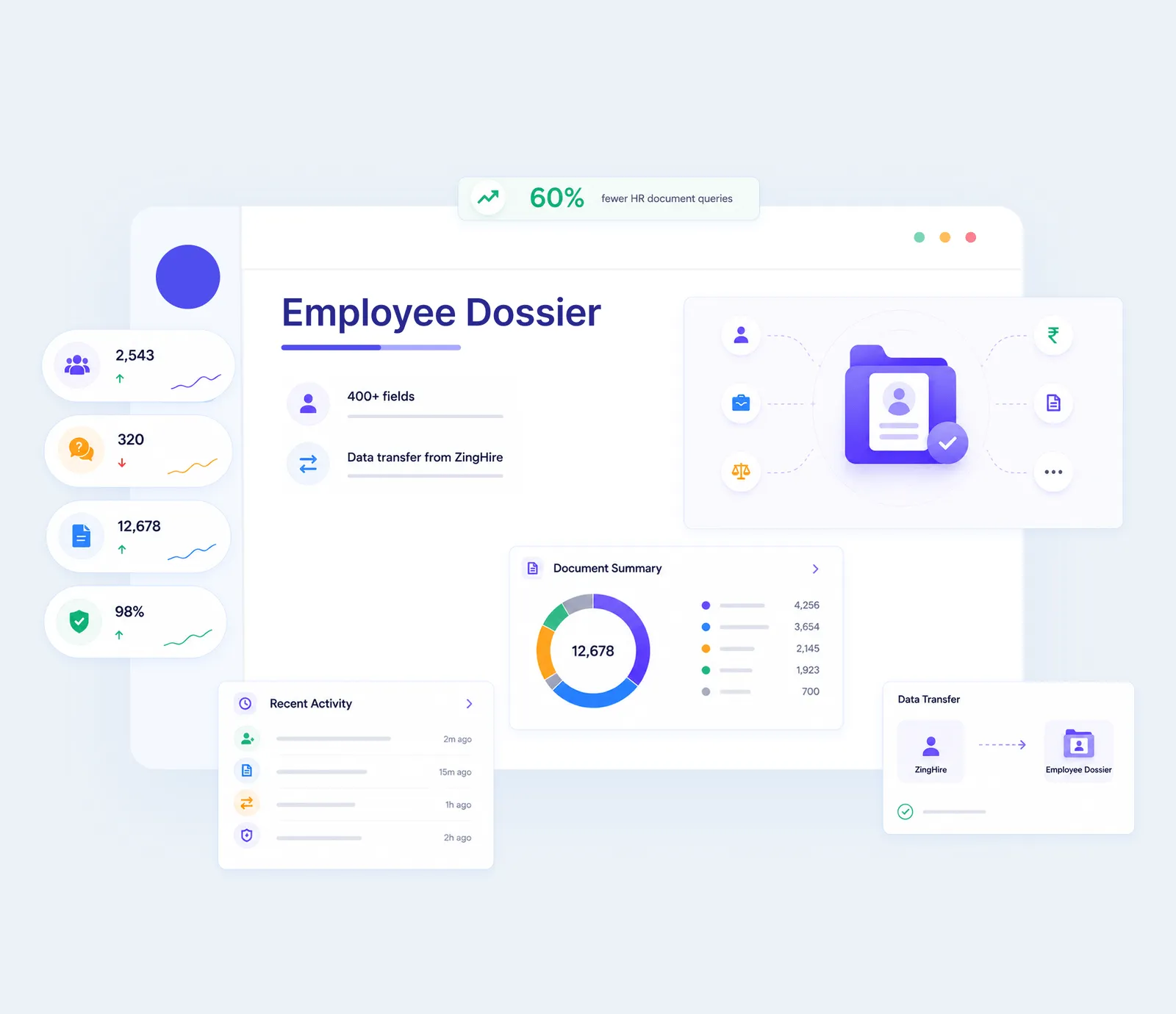
HR Launchpad holds the foundational employee dossier, with 400+ configurable fields covering personal, professional and financial data. Everything downstream, from payroll to performance, reads from the same record.
The unified architecture removes the reconciliation headaches that fragment most HRMS stacks. HR, Finance and Operations stop running separate systems that produce contradictory numbers.
2. Ghrowth.ai for Agentic Intelligence
Ghrowth.ai carries the agentic intelligence layer inside the platform. It answers HR queries on WhatsApp and Microsoft Teams, grounded in the organisation's own policies.
It raises routine transactions like leave and claims, and it surfaces payroll anomalies before pay runs. The agentic layer closes the loop between insight and action inside the same interface HR teams already use.
3. Zero-Touch Payroll With Live Analytics
ZingZeroTAP handles zero-touch payroll across every legal entity. It aggregates attendance, leave, salary revisions and full-and-final inputs into one automated pass. Statutory filings for PF, ESIC, PT and TDS apply automatically as government notifications land.
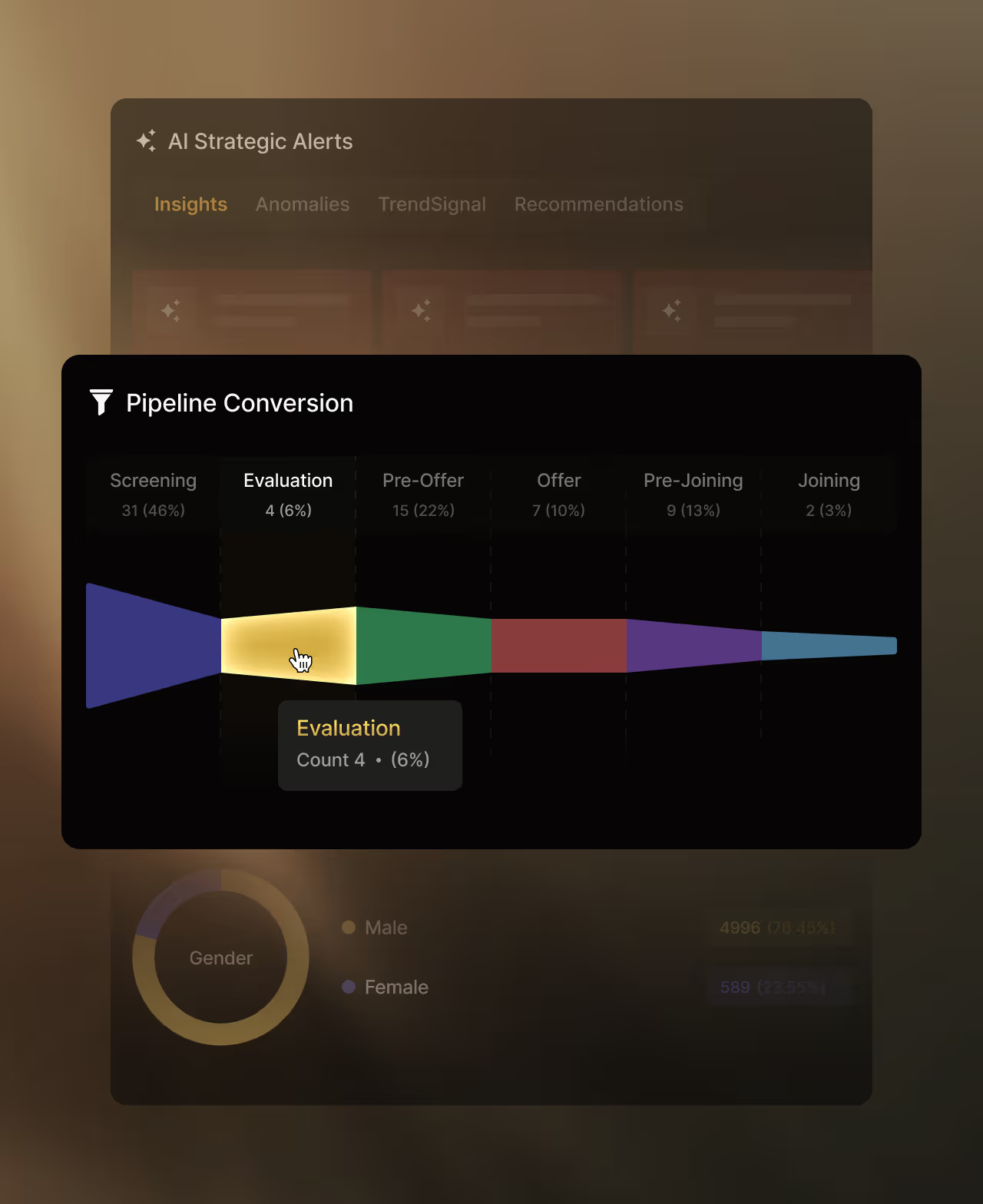
The Zing Intelligence Hub layers 19 live Power BI dashboards on top, tuned per persona with row-level security. Boards see workforce cost across every entity. HRBPs see their business unit. Managers see their team.
Building an HRMS Around What Your HR Team Runs
Start the evaluation with the payroll and leave workflows your team runs every month, and ask each vendor to run them on your own data during the demo.
Before shortlisting, check statutory coverage state by state, the manager approval flow on a phone, and how the HRMS hands data to finance.
Book a demo to see ZingHR run your payroll, leave and approval workflows on your own data.
Frequently asked questions (FAQs)
Businesses can assess HRMS ROI by comparing implementation and subscription costs against savings from reduced payroll processing time, fewer manual errors, faster hiring, and lower administrative effort. Tracking these measures before and after implementation helps quantify operational improvements.
Export employee master data, salary structures, leave balances and statutory identifiers from the old system, then remove duplicates before import. Run at least one parallel payroll cycle on both systems and resolve every variance before switching off the old one.
Yes, if it supports attendance and self-service without a desk login. ZingHR captures attendance through facial recognition and biometric devices, and Ghrowth.ai lets frontline employees check leave balances and payslips on WhatsApp.
Yes. An HRMS processes personal data such as bank details, addresses and identity documents, so the Digital Personal Data Protection Act, 2023 applies. Check consent records, role-based access to salary fields, breach reporting and where the vendor hosts data.
Yes. ZingHR connects to enterprise resource planning (ERP), finance and biometric attendance systems through 100+ integrations, so finance keeps its ledger and attendance devices stay in place while HR moves core processes onto the platform.
What to do next?
See ZingHR in Action
Join the 1,200+ enterprises that have replaced fragmented HR with one intelligent, future-ready platform. See ZingHR in 30 minutes.
Build the Organization You Want
Great HR drives retention, capability, and culture. ZingHR takes care of the operational layer so your people team owns the strategy.
Dr. Rohit Goswami
Head — Centre of Excellence
Dr. Rohit Goswami is Head — Centre of Excellence at ZingHR, where he leads Product Management and the AI Centre of Excellence. A surgeon-turned-product leader, he drives AI strategy across product lines and the entire employee lifecycle. Recognized as a thought leader in Agentic AI and HR technology, Rohit focuses on bridging emerging technology and real business outcomes — building intelligent, user-centric solutions that help organizations unlock productivity and prepare for the future of work.

Elevating Impact.
Defining Destiny
See how ZingHR's AI-powered Hire-to-ReHire platform frees your CPO to lead with purpose and deliver the outcomes your Board is watching for


ZingHR is the AI-powered Hire-to-ReHire platform built for one purpose to remove every transactional layer of HR from your organisation, permanently.