Salary Benchmarking UAE: How Employers Set Pay That Holds Up
Salary surveys for the UAE disagree on the size of next year's pay rise. A working benchmarking method helps HR and finance teams set ranges they can defend.


Table of contents
One unstitched HR platform to manage your entire workforce, from Hire to Re-Hire.
Talent Management solutions built for growing and exceptional people
Built-in compliance tools that update with changing regulations
Automated payroll, attendance, and leave management
Insights that help HR leaders make faster, better decisions

Key Takeaways
- Salary benchmarking in the UAE compares each part of a pay package (basic salary, allowances, bonuses and benefits) against current market data for matched roles.
- Basic salary and allowances need separate benchmarks, because end-of-service gratuity under UAE Labour Law is calculated on basic wage.
- AI, data and cybersecurity roles carry premiums of 10% to 15% above comparable roles in organisations that pay one, so fast-moving roles need a six-monthly refresh.
- Emiratisation targets and the Wage Protection System (WPS) turn pay data into a compliance record, so clean payroll data is the starting point for any benchmark.
- ZingHR connects benchmarked ranges to compensation cycles, payroll and board dashboards on one database, with Ghrowth.ai adding agentic intelligence for CXOs.
UAE employers are setting 2027 pay budgets on data that points in different directions. The 3.4% average base increase UAE companies budgeted for 2026, per Korn Ferry's June 2026 pulse survey, is projected to ease to 3.3% in 2027. Cooper Fitch's UAE Salary Guide recorded an actual 2025 increase of 2.6% and forecast only 1.6% for 2026.
Both figures describe the same market. The difference comes from sample, method and whether new hires or existing staff are counted. A CHRO who anchors on one number risks overpaying across the board or losing critical people to a competitor that reads the data differently.
Moreover, iInflation adds pressure on the cost side. The Central Bank of the UAE (CBUAE) raised its 2026 inflation forecast to 2.3% in its June 2026 review. It projects GDP growth of 9.8% in 2027 after a slower 2026, which points to renewed hiring demand as the 2027 pay cycle opens.
What is Salary Benchmarking in the UAE?
Salary benchmarking compares what your organisation pays for a role against what other employers pay for the same role and level. In the UAE, it covers far more than the headline salary.
A UAE pay package usually splits into basic salary and fixed allowances, with variable pay handled separately. Benefits such as medical cover and annual air tickets sit on top, while school fees may also be included. Each component carries a different legal and cost weight, so benchmarking only total monthly pay hides the detail finance teams need.
Good salary benchmarking in the UAE answers four questions for every benchmarked role:
- Where does our basic salary sit against the market median for this role and level?
- Are our allowances in line with what peers pay in Dubai, Abu Dhabi and the Northern Emirates?
- Does total cash compensation keep us competitive for the talent we most need to attract and retain?
- Is pay consistent across people doing the same job inside our own organisation?
Why Salary Benchmarking Matters in the UAE Job Market
The UAE market moves faster than annual review cycles. Population growth has widened candidate pools for mid-level roles, while specialist skills remain scarce. Hiring trends and market trends shift within a single budget year, and pay decisions made on last year's data miss both.
Cooper Fitch found 48% of UAE companies planned to raise salary ranges in 2026, while 15% expected lower ranges for new hires. One market is running two pay stories at once. Without current salary benchmarks, an employer cannot tell which story applies to each role.
Salary benchmarking protects three outcomes that boards track closely:
- Retention of top talent: Pay below market for critical roles shows up as resignations, often from the people hardest to replace. Current benchmarks help employers retain talent before an exit interview explains the pay shortfall.
- Cost control: Pay above market for roles with plentiful candidates inflates the salary bill without improving hiring outcomes.
- Defensible pay decisions: Managers and employees accept pay outcomes more readily when ranges come from documented market data.
Employees are watching too. The PwC Middle East Hopes and Fears Survey found 85% of Middle East employees rate job security as very important. Fair, explainable pay is one of the clearest signals of security an employer can give.
UAE Salary Trends Shaping 2027 Pay Decisions
Four data points frame the 2027 planning round for UAE employers. The table below sets them side by side.
Published UAE salary and inflation figures relevant to 2027 pay planning
Three salary trends sit behind those numbers.
1. Targeted Increases
Across-the-board uplifts are giving way to selective pay rises for high performers and hard-to-replace skills. Korn Ferry surveyed 5,512 organisations across 135 countries. Across major markets, 2027 increases are expected to hold flat or dip slightly against 2026.
2. Skill Premiums
AI and data roles now carry their own pay bands, as innovation budgets compete for the same small pool of specialists.
Among organisations that have defined AI-related positions, Korn Ferry's March 2026 survey found the most common premium ranges from 10-15% above comparable roles. Nearly two-thirds of respondents were unsure what the right premium should be, which makes local benchmarking more valuable.
3. Emirate-Level Cost Gaps
Living costs differ sharply between emirates. The CBUAE June 2026 review reported Dubai inflation averaging 3.7% against 1.4% in Abu Dhabi. Housing and transport allowances benchmarked at a national average will drift out of line in both cities.
How UAE Pay is Structured: Basic Salary, Allowances and Total Remuneration
The UAE operates without personal income tax, so employers compete on gross pay and benefits. Structure matters as much as level, because each component has a different legal effect.
End-of-service gratuity under Federal Decree-Law No. 33 of 2021 is calculated on basic wage. A package weighted towards allowances costs less at exit. A package weighted towards basic salary is more attractive to candidates planning long tenures. Salary benchmarking has to show both views.
UAE pay components and how each should be benchmarked
As an indicative planning figure, many UAE packages place 60% to 70% of fixed pay in basic salary and the rest in allowances. Treat that split as a directional reference drawn from common practice, not a cited study. Your own sector and grade structure should set the actual ratio.
How to Run Salary Benchmarking in the UAE
A working benchmark follows the same six steps whether you employ 300 people or 30,000. The steps below assume an annual cycle with a mid-year refresh for high-demand roles.
1. Job Architecture
Benchmarks only work when roles are matched by content and level.
A "manager" in a Dubai bank and a "manager" in an Abu Dhabi industrial group can differ by two grades. Build or refresh a job architecture with levels, job families and clear role descriptions before pulling any data.
2. Several Data Sources
Use at least three sources: a consultancy survey, a recruiter UAE salary guide and your own offer and exit data. Consultancy surveys cover existing employees. Recruiter guides reflect external hiring.
Your own data shows where candidates accept or decline. The spread between 1.6% and 3.4% across each salary guide 2026 edition shows why one source is never enough.
3. Component-Level Comparison
Compare basic salary, each allowance and total cash compensation separately. Price benefits on their own line. A role can look competitive on total cash and still lose candidates because the housing allowance trails Dubai rents.
4. Market Position
Decide where you want to sit for each job family. A common approach targets the market median for general roles and the 75th percentile for critical skills. Roles with deep candidate pools can sit lower. Write the policy down so managers apply it consistently.
5. Internal Equity
External competitiveness means little if two people in the same role and grade earn very different amounts. Run a pay equity check by grade, gender and nationality alongside the market comparison. Close unexplained gaps in the same cycle.
6. Refresh Cadence
Refresh benchmarks annually for stable roles and every six months for fast-moving ones such as AI, cybersecurity and data. Tie each refresh to a budget checkpoint so findings reach pay decisions, not just reports.
Salary Benchmarks by Sector: Where Pay Pressure Sits
Pay pressure is uneven across key industries in the UAE. The view below is an indicative planning guide built from the trends above. Use it to decide which job families need a six-monthly refresh.
Indicative sector view of UAE salary benchmarking priorities for 2027 planning
Business units in the same group often sit in different rows of the table. A diversified holding company may need a six-month cycle for its technology arm and an annual cycle for facilities. Benchmarking at group level alone hides both.
Rules and Pressures Beyond the Market Rate
A benchmark tells you what the market pays for a role. It does not tell you who you must hire, how pay must be processed or how you will explain the number to an employee. In the UAE, three factors answer those questions and change how benchmarked ranges get applied. Each one needs a place in your pay policy before the 2027 cycle opens.
1. Emiratisation
Private companies with 50+ employees must lift the share of UAE nationals in skilled roles by 2% a year. The goal was 10% by the end of 2026, so 2027 budgets start from the full target.
Competitive offers for Emirati talent need their own benchmark, because the candidate pool and pay expectations differ from the expatriate market. Progressive employers run dual-framework pay structures with separate ranges for each group.
2. Wage Protection System
WPS records private-sector salary payments electronically and checks them against agreed wages. Any mismatch between contract, payroll and payment file becomes visible to the authorities.
Benchmarked ranges have to flow into contracts and payroll without manual rework, or WPS will surface the gap first.
3. Salary Transparency
Salary transparency is rising as an employee expectation, even without a UAE disclosure law. Candidates arrive at the offer stage negotiating with salary data of their own.
Korn Ferry's June 2026 survey named reward communication a major weakness, with manager capability critical to explaining pay decisions. Benchmark data gives managers the evidence to explain a range, and the UAE employment law sets the contractual guardrails.
Common Salary Benchmarking Mistakes UAE Employers Make
Salary benchmarking in the UAE usually goes wrong after the data arrives. Errors creep in through how roles are matched, how pay is split and whether results ever reach a pay cycle. Each mistake below leads to one of two costs: overpaying for roles with deep candidate pools, or losing people in scarce ones.
- Relying on one salary guide: A single source can sit a full point or more away from peers. Triangulate across at least three.
- Matching on job title: Titles inflate differently across employers. Match on role content and level.
- Benchmarking total pay only: Blended totals hide gratuity cost and allowance gaps. Benchmark each component.
- Ignoring emirate differences: Allowances set on a national average drift out of line in Dubai and Abu Dhabi. Benchmark by location.
- Running benchmarks on stale payroll data: Internal figures from last quarter's export miss mid-cycle revisions. Pull live data from the system of record.
- Stopping at the report: Benchmarks that never reach a pay cycle change nothing. Link each refresh to a budget decision.
How ZingHR Supports Salary Benchmarking in the UAE
ZingHR is an agentic intelligence HCM platform built for boards and CXOs. Its role in salary benchmarking is to hold clean internal pay data, apply benchmarked ranges in compensation cycles and report the outcome live. Every module writes to one database, so the internal side of every benchmark is current on the day you run it.
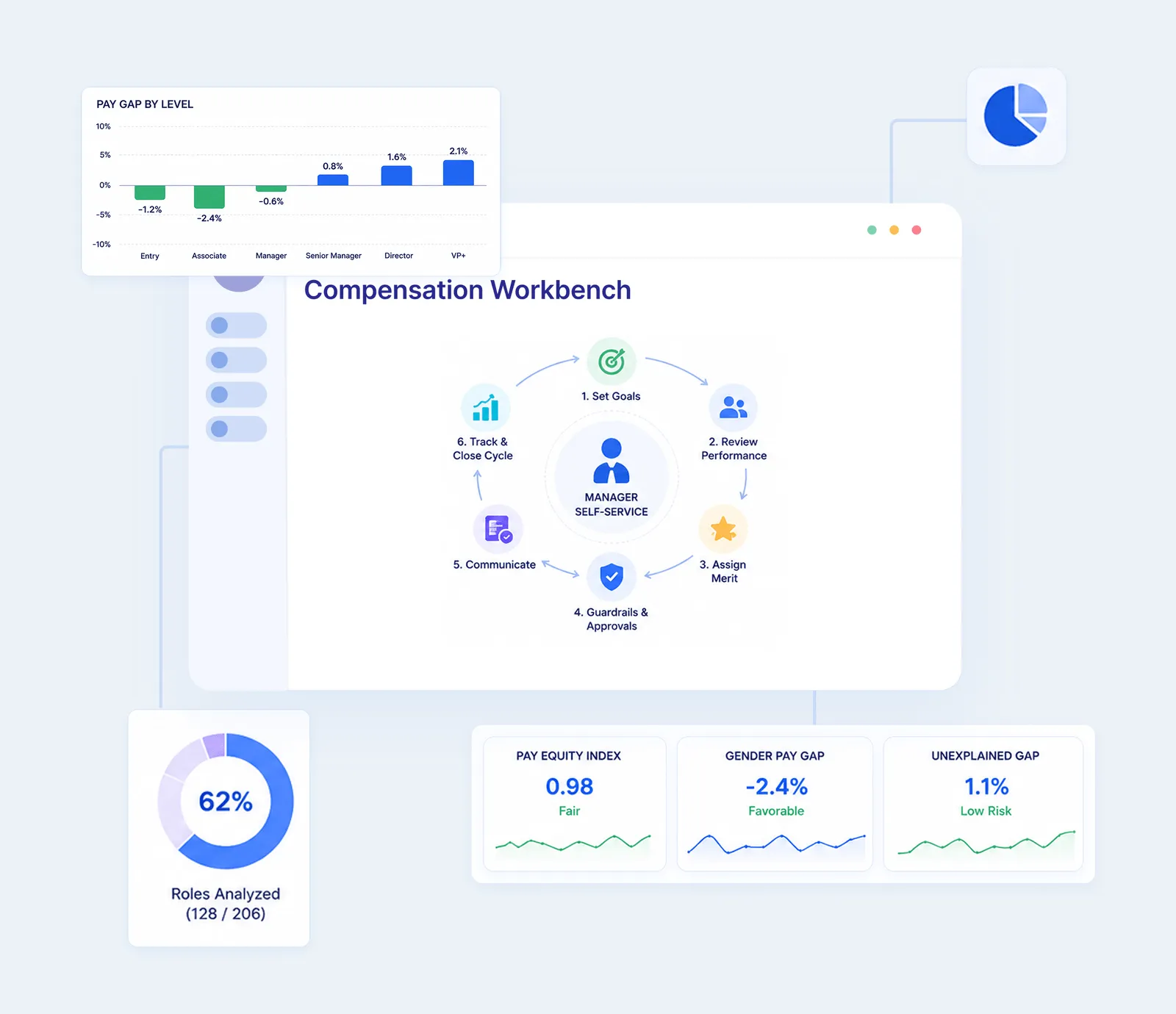
1. Compensation Workbench
ZingGrow connects performance ratings to pay revisions. Finalised ratings flow into a merit matrix that maps each rating to a revision band, and managers work inside budget guardrails. Pay equity and gender pay gap reports are available at one click for board review, covering the internal equity step directly.
The performance management process and the pay cycle run as one workflow.
2. Pay Analytics and Ghrowth.ai
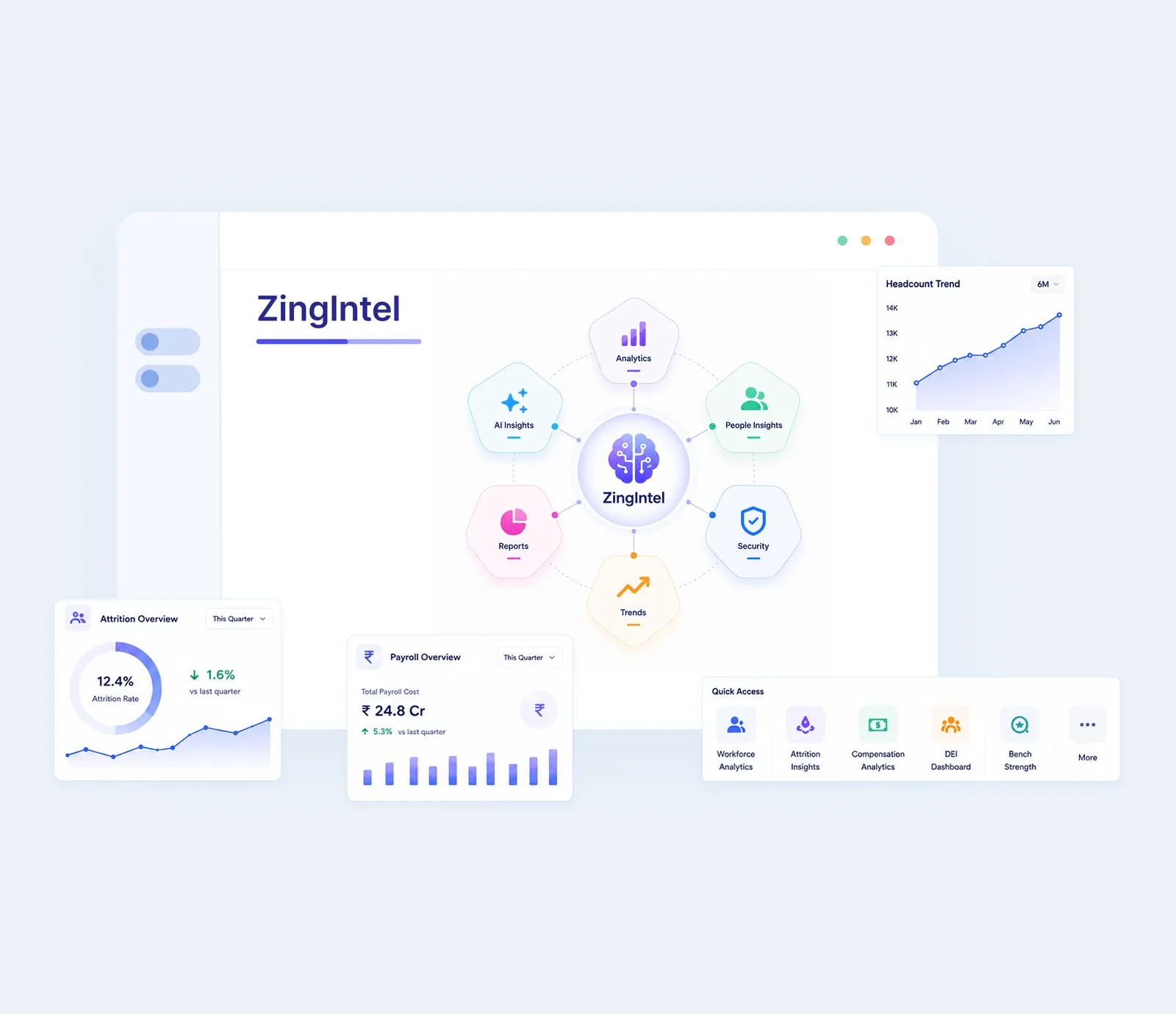
The Zing Intelligence Hub runs 19 live Power BI dashboards with row-level security. The CHRO sees organisation-wide salary levels, the CFO sees cost against budget and each HR business partner sees their business unit.
Ghrowth.ai, ZingHR's agentic intelligence layer, lets CXOs ask where pay sits against range and which roles carry retention risk. It then tracks the actions that follow. Teams comparing workforce analytics tools in the UAE can test this against their own reporting needs.
3. WPS-Ready Payroll
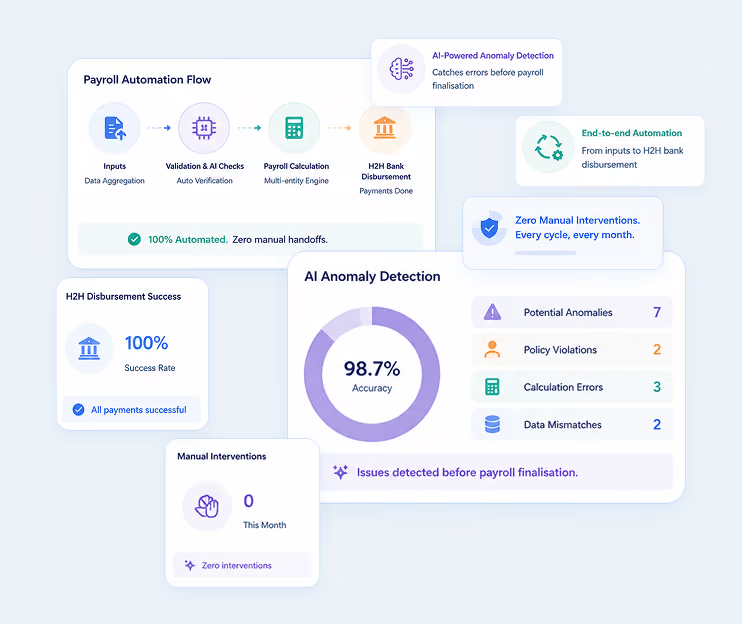
ZingZeroTAP runs zero-touch, multi-entity payroll, with AI anomaly detection before each pay run. Basic salary, every allowance and variable pay sit in separate fields, so gratuity accruals and WPS salary files reflect the approved structure.
Revised ranges move from the compensation cycle into payroll without re-entry. Buyers weighing the payroll software can use this as a test case.
Organisations such as Teleperformance, Burjeel, SGS and Shapoorji Pallonji run their people operations on ZingHR across the region. Their HR and finance teams work from one pay record instead of reconciling separate spreadsheets.
Also read: UAE Payroll Regulations: WPS Rules, Deadlines and Compliance Explained
Setting 2027 Pay Ranges With Confidence
The 2027 pay round opens with forecasts that disagree, inflation above last year's levels and growth expected to pick up. Salary benchmarking gives HR and finance a shared basis for each decision. The same logic sets the housing allowance for a Dubai analyst and the premium for an AI engineer in Abu Dhabi.
The method is consistent. Match roles by content, use several data sources, benchmark each component and refresh fast-moving roles twice a year. The harder part is keeping internal pay data clean enough to compare. Once that record is live, benchmarks turn into pay decisions within the same cycle.
Disconnected payroll and compensation data slow every benchmarking cycle. ZingHR links benchmarked ranges, compensation reviews and UAE compliance on one platform. Book a demo today.
Frequently asked questions (FAQs)
Benchmark stable roles once a year, ahead of the budget cycle. Refresh fast-moving roles such as AI, cybersecurity, data and wealth management every six months. Tie each refresh to a budget checkpoint so the findings change pay decisions.
Yes. End-of-service gratuity in the UAE is calculated on basic wage, so the split between basic salary and allowances changes long-term cost. Housing and transport allowances also vary by emirate and need location-specific benchmarks.
Combine a consultancy compensation survey, one or two recruiter salary guides and your own offer, acceptance and exit data. Each source measures a different slice of the market, and the combination gives a more dependable range than any single salary guide.
Emirati candidates form a separate talent pool with different pay expectations. Private companies with 50+ employees must lift Emirati representation in skilled roles by 2% a year. Employers therefore run separate benchmarks and ranges for UAE nationals and expatriates.
A common policy targets the median for general roles and the 75th percentile for critical or scarce skills. Roles with deep candidate pools can sit lower. Document the policy by job family so managers apply it consistently.
HR software holds the internal side of the benchmark. ZingHR keeps each pay component on one live database and applies benchmarked merit bands in the Compensation Workbench. Board dashboards then report salary levels against range.
What to do next?
See ZingHR in Action
Join the 1,200+ enterprises that have replaced fragmented HR with one intelligent, future-ready platform. See ZingHR in 30 minutes.
Build the Organization You Want
Great HR drives retention, capability, and culture. ZingHR takes care of the operational layer so your people team owns the strategy.
Chandrasekar (Chandru) Subramanian
Chief Growth & Operations Officer — EMEA
Chandrasekar (Chandru) Subramanian is the Chief Growth & Operations Officer for EMEA at ZingHR, where he drives growth, strategic partnerships, and market expansion across international markets. With over two decades in international sales and revenue leadership, he has built and scaled operations across diverse geographies. Chandru works closely with organizations to accelerate digital HR transformation through ZingHR's HCM solutions. His focus is on sustainable growth, high-performing teams, and long-term value for customers and stakeholders.

Elevating Impact.
Defining Destiny
See how ZingHR's AI-powered Hire-to-ReHire platform frees your CPO to lead with purpose and deliver the outcomes your Board is watching for


ZingHR is the AI-powered Hire-to-ReHire platform built for one purpose to remove every transactional layer of HR from your organisation, permanently.