12 HR Best Practices for Your Company in India: A CXO Playbook
A practitioner’s guide to the twelve HR practices that hold up at multi-entity, multi-state scale, covering structured hiring through to agentic AI. It sets out the compliance floor under DPDP 2023, the four labour codes and the EU AI Act, the four-phase sequence for putting the practices in place, and the KPI scorecard that shows whether any of it is working.

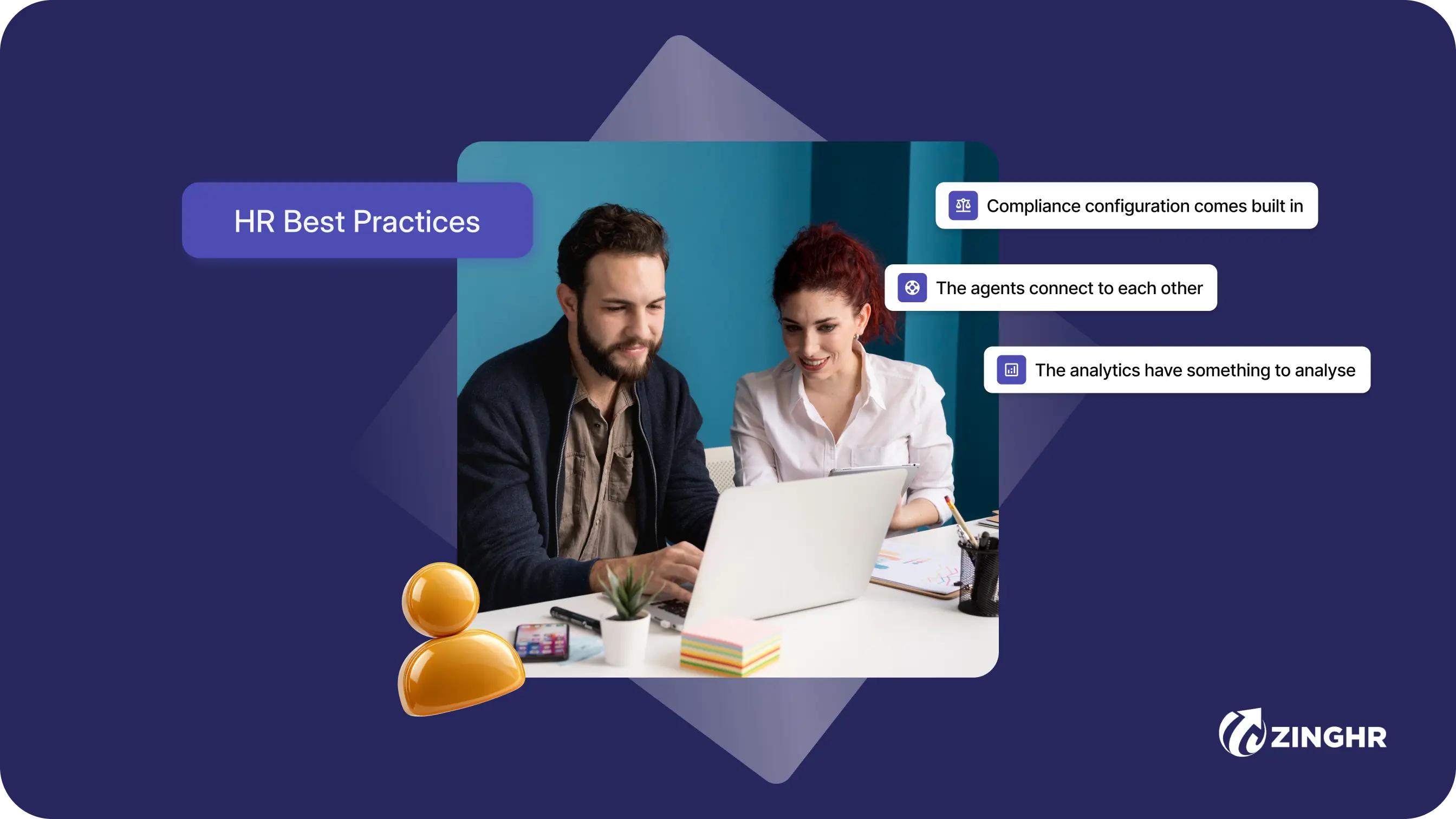
Table of contents
One unstitched HR platform to manage your entire workforce, from Hire to Re-Hire.
Talent Management solutions built for growing and exceptional people
Built-in compliance tools that update with changing regulations
Automated payroll, attendance, and leave management
Insights that help HR leaders make faster, better decisions

Key Takeaways
- Generic HR advice assumes one office and one legal entity, so it collapses at scale where employee data sits in separate systems, statutory rules change across state lines, and manual approvals leave you with nothing to show an auditor.
- The twelve practices work as one connected system, which means structured hiring pays off only when its data reaches performance records, and continuous feedback matters only when ratings reach pay decisions.
- Agents should own routine service delivery such as policy queries and document chasing, while hiring, exit, promotion and pay stay with a named person who can explain the decision.
- DPDP 2023, the four labour codes and the EU AI Act set the floor every practice stands on, so build consent capture, wage-code configuration and bias testing into the workflow instead of auditing for them afterwards.
- ZingHR gives you that connected system in one place, combining unified HCM with the Ghrowth.ai agentic layer so compliance configuration, talent data and board-level analytics all run against a single employee record.
Your company has its HR policies written down and circulated, and you will still find two managers running the same onboarding in completely different ways. One of them sits down with the new joiner on day one and walks through what the first month looks like, while the person two desks away forwards a welcome email and hopes for the best.
That distance between the written policy and the lived experience is the problem you are paid to close, and it widens as the company grows. Deloitte's 2025 Global Human Capital Trends report found that 73% of companies recognise the need to reinvent the manager role while only 7% are making meaningful progress, which tells you how much of this work is good intent waiting for a usable process.
Three shifts are adding pressure while you learn the job. Agentic AI has moved out of pilot projects and into production HR work, and India's DPDP Act of 2023 together with the four labour codes has redrawn what compliance means day to day. Boards have also started asking harder questions about workforce cost and quality than most HR systems can answer.
So what follows is the set of HR best practices that survive that pressure, with what each one looks like inside a large Indian company and the numbers that tell you whether it works.
Why Generic HR Advice Breaks in Large Indian Companies
Read almost any HR best-practice list and you are reading advice written for 200 people in one office under one legal entity, which holds up until your company stops looking like that.
1. Your employee data sits in separate systems
Payroll, hiring, learning and performance each hold one slice of the employee record, which is why a question like quality of hire by sourcing channel turns into a three-week project. You need recruitment data joined to performance data from nine months later, and when those live in different systems somebody rebuilds that join by hand in a spreadsheet, usually the week the board meeting happens.
A unified layer such as the Zing Intelligence Hub exists because leadership asks those questions faster than a spreadsheet can answer them.
2. Compliance multiplies with every state and border
Inside India alone you configure wage-code definitions state by state and capture DPDP consent at every candidate touchpoint, while Professional Tax and Labour Welfare Fund obligations shift as you cross a state line. Statutory filing under the Employees’ Provident Fund Organisation (EPFO) and Employees’ State Insurance Corporation (ESIC) carries its own configuration on top of that.
Add cross-border payroll and the stakes rise again, because a process that satisfies Indian rules in Mumbai can create liability in Frankfurt the moment the General Data Protection Regulation (GDPR) and the European Union Artificial Intelligence Act (EU AI Act) apply. What makes this workable is treating multi-state statutory logic as configuration, so a rule change becomes a settings update instead of a development ticket sitting in a six-week queue.
3. Manual approvals leave you nothing to show an auditor
Manual approvals feel faster when you are under pressure, but they fail the moment someone asks for evidence, because an auditor who wants the decision trail on a promotion needs more than an email thread and your recollection of the conversation. When the workflow records its own approvals as it runs, you answer that request in minutes and go back to your day.
12 HR Best Practices for Indian Companies
They run from structured hiring through to governed use of agentic AI, in the order an employee meets them. Each one below comes with what it looks like in practice and the point where a platform earns its place.
1. Build a structured hiring process
Structured hiring means every candidate for a role answers the same questions and gets scored against the same criteria, which sounds bureaucratic until you see what it does to prediction. Structured interviews and work samples forecast on-the-job performance far better than a free-flowing conversation about someone's CV, because you are finally comparing people on the same evidence.
For example, run a two-stage loop where one interviewer sets a work sample and the other covers a fixed competency set, each scoring against a written rubric before they compare notes. The decision then rests on what candidates actually did, and the loudest voice in the debrief loses its advantage.
Verification carries more weight than it did five years ago, because Gartner projects that one in four job candidate profiles worldwide will be fake by 2028, including AI-generated profiles and deep-fake video interviews. Which is why Indian recruiting teams increasingly wire a verification partner such as AuthBridge into the offer workflow itself, so the check runs inside the applicant tracking system instead of becoming an email chain somebody forgets to chase.
2. Standardise onboarding and tie it to 90-day retention
Onboarding earns its budget when new joiners stay and become productive, so pick 90-day retention as your outcome and measure the workflow against it. When document collection and system provisioning finish before day one, your new joiner walks into a laptop that works and a checklist that tells them what happens next.
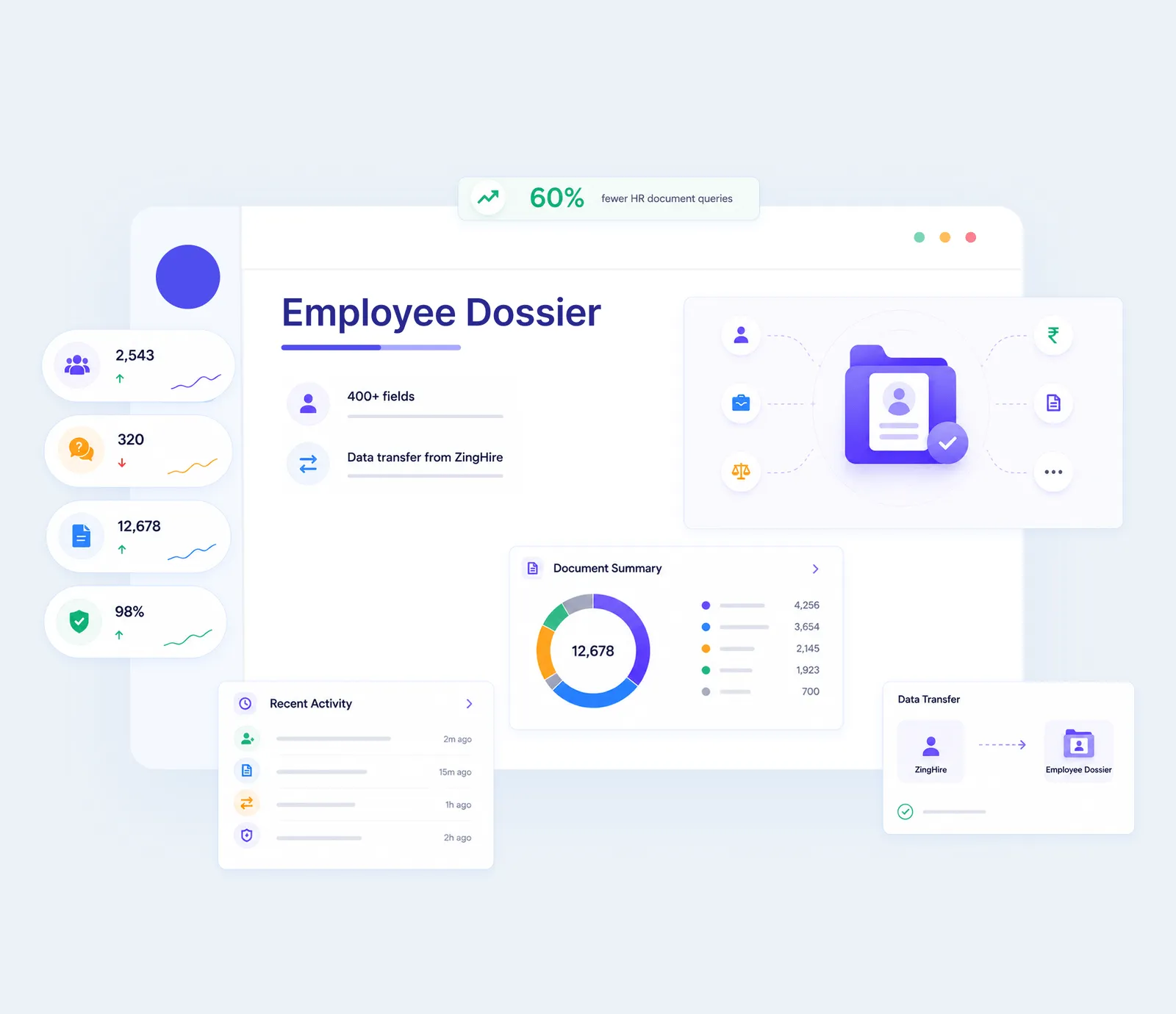
Ad hoc onboarding loses exactly the hires you worked hardest to win, usually inside the first quarter, and the replacement cost lands on the P&L where the board can see it. Tooling such as ZingHR's HR Launchpad is built around that sequence, which lets you spot the new hire stuck waiting on a pending approval well before they start updating their CV.
3. Set clear performance goals
Write goals that your employee and their manager would describe the same way six months later, because that is the only version either of them can be held to. Cascading helps here, since a support team's first-response target visibly connects to a company retention goal and the employee can see why the work matters.
4. Give feedback continuously
A rating delivered eleven months after the event changes nothing, because the moment to correct course passed somewhere around month two. Short check-ins on progress and blockers do the real work, while quarterly calibration across managers keeps ratings comparable enough to carry weight in a pay decision.
Feedback that stays in a manager's notebook is wasted, so push ratings into compensation decisions and feed early performance signals back into hiring. Once you do that you start learning which sourcing channels produce people who succeed, and a connected talent management layer is what holds that loop together.
5. Invest in learning, including AI literacy
Train people for the role they hold now and the one they want next, which is why role-based paths beat the company-wide training week where a finance analyst and a shop-floor supervisor sit through identical slides.
AI literacy works best in tiers, because each group needs something different from it. Executives need enough governance fluency to approve or reject a use case, while managers need judgment about where AI helps and where it quietly misleads. Everyone else needs plain rules on secure use, and you should cover the guardrails as seriously as the productivity gains, because untrained adoption is where data leaks and bias slip in.
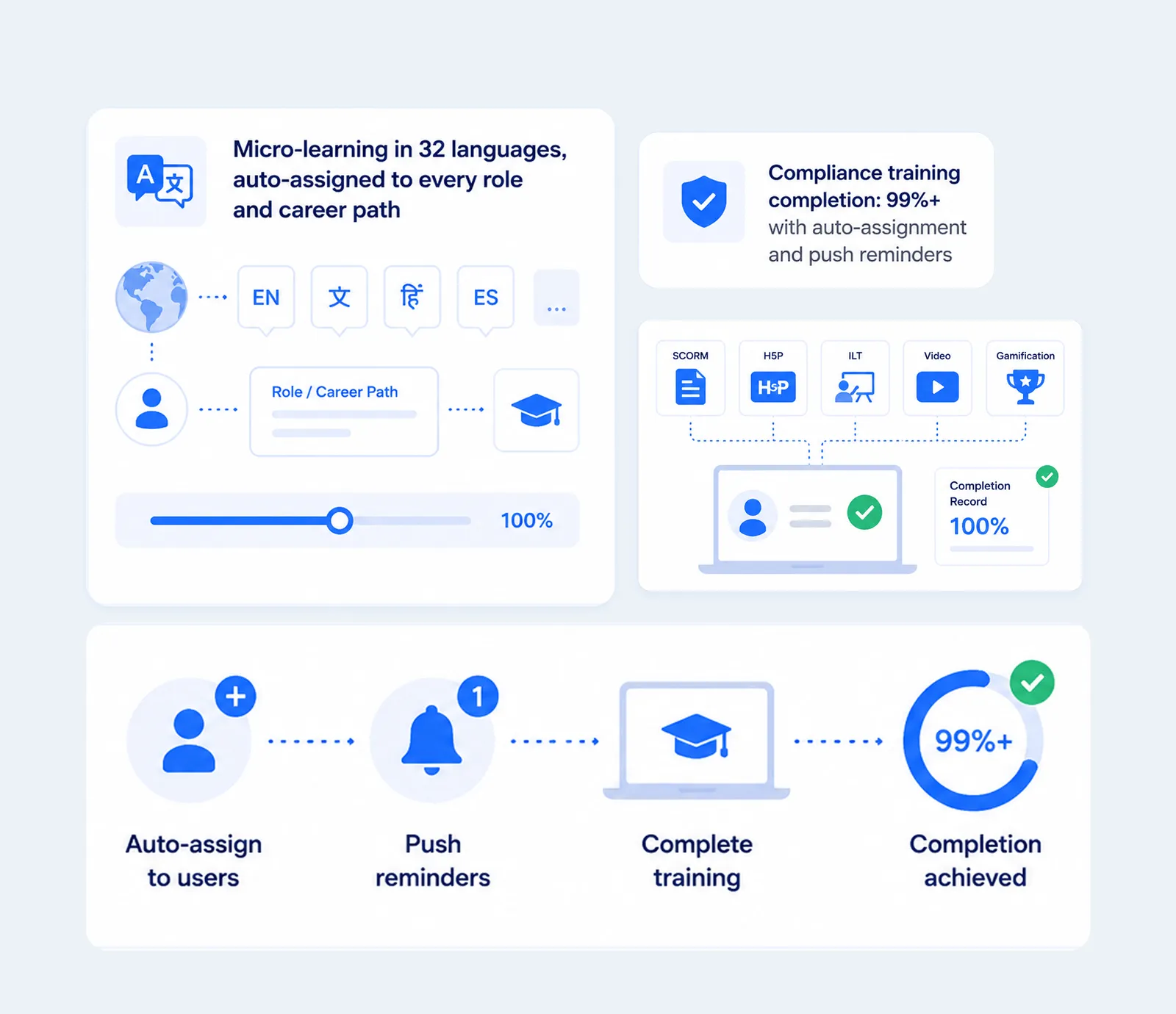
A platform such as Zing Learn assigns those journeys by role automatically, so the right module reaches a new joiner during their first week.
6. Build fair and consistent compensation practices
Explain pay decisions to the person receiving them even when they disagree with the outcome, which takes defined bands and a documented progression logic sitting behind the conversation. Audit regularly for differences nobody can account for, because India's four labour codes make consistent wage definitions a statutory requirement and variation surfaces quickly under audit.
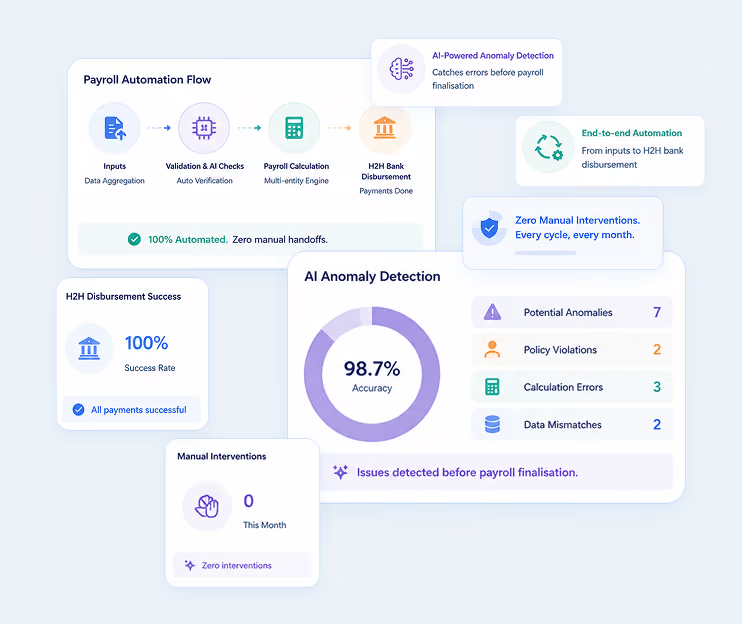
The real question is how long it takes you to ask. When pay-equity reporting runs as a query you ask every month and catch something, while a three-week reconciliation means you ask once a year and catch nothing. A managed payroll service or an in-house engine like ZingZeroTAP changes that arithmetic.
7. Support employee wellbeing inside everyday processes
Build wellbeing into ordinary HR workflows, because a leave policy people can use without negotiating for it does more good than an annual awareness week. For example, a policy that permits mental-health days on paper while requiring a verbal request to the manager in person will sit unused for years, since the process quietly defeats the intent.
Your managers carry most of this, so give them specific guidance on recognising strain and a short list of where to route someone who needs help. When employees cannot find a benefit, you are paying for it and getting nothing back.
8. Create an inclusive workplace and measure it
Diversity describes who is in the room, while inclusion describes whether those people can contribute once they are there, and the latter is what moves business outcomes. Treat it as a control with numbers attached, which means tracking selection-rate parity at each hiring stage and promotion rates by group, alongside attrition that clusters inside one team.
Audit any algorithm you use in screening or performance scoring for disparate impact on a fixed schedule. What is interesting is that these numbers only attract attention once they sit in the same dashboard as revenue and cost.
9. Keep employee records accurate and secure
You will handle more sensitive personal data than almost anyone else in the company, including identity documents, bank details and health records. The DPDP Act of 2023 made the obligations explicit, so you need a lawful basis for every field you hold and explicit consent for sensitive categories such as biometrics.
Give retention periods an end date and keep access narrow enough that a recruiter stays out of payroll records. A useful test before you add a field to any form is whether you can state why you need it and how long you will hold it.
10. Use HR data to answer real questions
People analytics proves its worth the first time it settles a question honestly, and the value comes from connection more than from any single metric. If you want to show that a retention initiative worked, you need the population it touched and the turnover outcome sitting in one place alongside the initiative itself.
Without a shared data spine, your annual review of what worked ends with a story where a number should be. A unified HR data layer, of the kind the Zing Intelligence Hub runs, hands you the number instead.
11. Make HR processes consistent and auditable
Give every recurring HR process a named owner and a defined approval path, then keep a record of what was decided. The requirement feels like overhead until someone asks you to prove something, and it bites hardest across entities, where one process quietly becomes four versions of itself.
Start with the policies themselves, because you cannot audit a process against a rule nobody wrote down. If your leave, conduct or grievance rules still live in people's heads, our guide to essential HR policies in India has templates for 20 of them. Then build compliance into the workflow so that payroll runs and policy acknowledgements produce their evidence while they happen.
12. Use agentic AI for routine work, with clear boundaries
Agentic AI carries out a sequence of steps toward a goal instead of following one fixed rule, and HR holds plenty of work in that shape, from answering leave questions to chasing missing onboarding documents. Draw the line between what an agent handles and what a person decides, then say it out loud, because agents should own routine service delivery while people keep the decisions that change someone's livelihood.
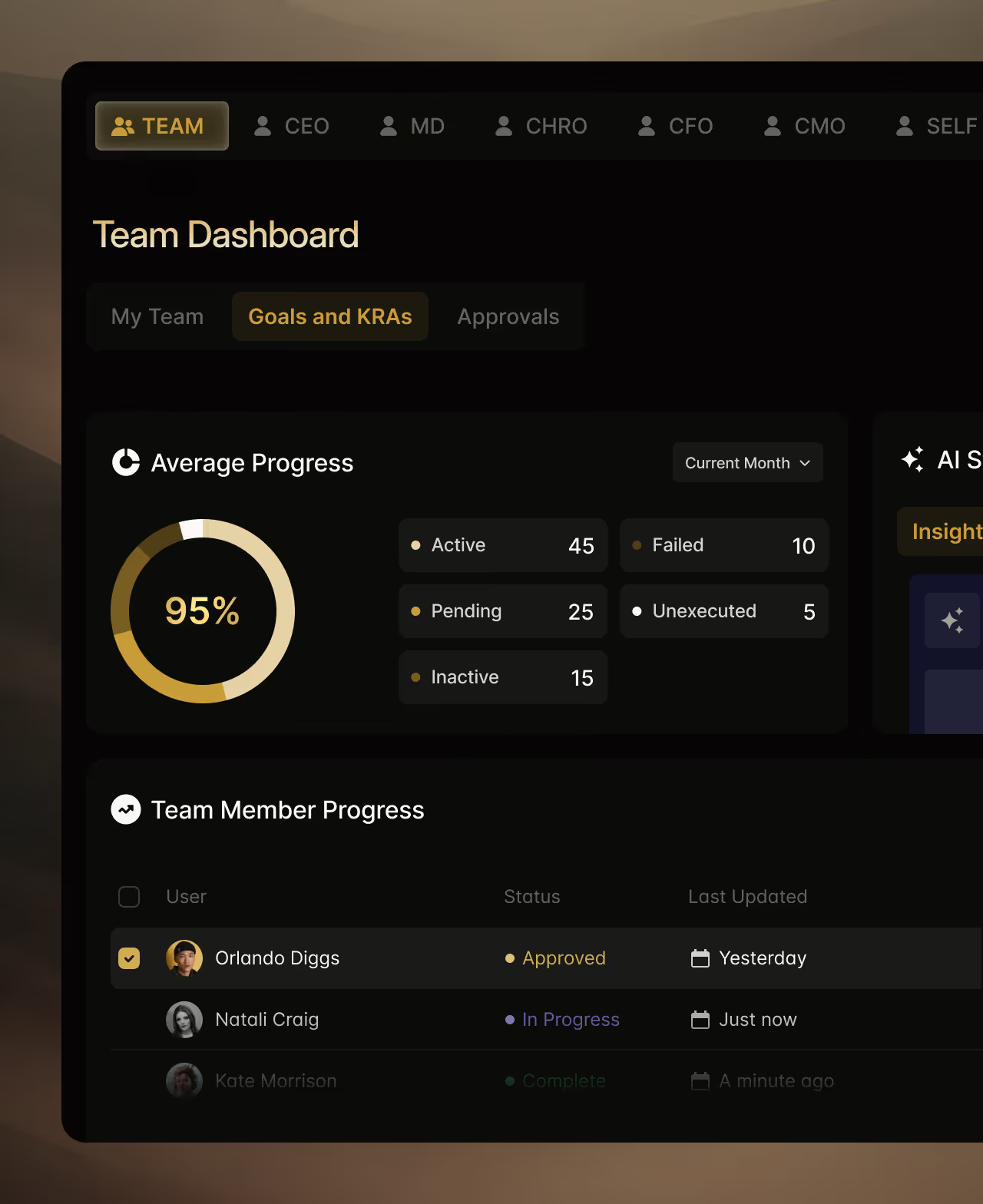
ZingHR's agentic layer, powered by Ghrowth.ai, is built around that split across the Hire-to-ReHire lifecycle, and the split deserves insisting on whatever platform you run.
What Should AI Agents Handle in HR, and What Should People Decide?
Agents should own routine service delivery such as policy queries and document chasing, while hiring, exit, promotion and pay stay with a named person. Getting that boundary right is what protects you when a regulator or a board asks how a decision was reached.
1. Adoption has moved past the pilot stage
Gartner predicts that 50% of current HR activities will be AI-automated or performed by AI agents by 2030. Closer to home, a KPMG India report found that 69% of organisations have already automated core HR operations and 66% of HR teams use generative AI, with job description creation and CV screening leading the way.
2. Agents take the routine service delivery
Hand agents the work that repeats with small variations, because that is where you win hours back fastest.
- Employee queries: leave balances, policy clarifications and first-line helpdesk requests
- Document work: offer letters, confirmation letters and chasing incomplete onboarding files
- Recruiter support: job description drafting and shortlist ranking for a human to review
- Reporting: recurring headcount and attendance reports produced on a schedule
When your team spends 40% of the week answering leave balance questions, this side of the line gives that time back first.
3. People keep the high-risk decisions
Keep hiring, exit, promotion and pay with someone who can be named, even while an agent prepares the inputs and drafts a review for a human to edit. That boundary is what lets you answer a regulator or a board asking how a particular decision was reached, because speed comes from the agent side of the line while trust comes from being able to point at the human side.
What Does HR Compliance Require Under DPDP and the Labour Codes?
DPDP asks for a lawful basis and consent behind every piece of personal data you hold, while the four labour codes ask for consistent wage-code definitions across every state you operate in. Companies with EU employees or customers carry a second set of obligations on top.
1. DPDP, the labour codes, EPFO and ESIC
The DPDP Act of 2023 rewrote how you may handle employee and candidate data, asking for a lawful basis behind every piece of personal data you hold and explicit consent for sensitive categories such as health records and biometrics. It also expects defined retention windows and access controls that limit data to people who need it for their role, so holding a terminated employee's medical file indefinitely puts you on the wrong side of it.
On payroll, configure standardised wage-code definitions aligned to the four labour codes and automate EPFO and ESIC reporting with a full audit trail. State-wise Professional Tax and Labour Welfare Fund obligations vary widely, and manual tracking is where compliance slips quietly until a notice lands on somebody's desk.
2. The EU AI Act and GDPR
If your company has EU employees or EU customers, a second regime applies, and the EU AI Act classifies employment AI as high-risk when it touches recruitment screening or performance scoring. In practice you keep a human in the loop on hiring and exit decisions, run Data Protection Impact Assessments where GDPR triggers them, and test any model affecting an employee outcome for bias on a regular cycle.
Run one governance framework across both regimes, because maintaining two sets of rules for the same recruiting process is how inconsistencies appear.
3. A checklist worth running every quarter
- Maintain an AI use-case register for every HR application, with the owner, the data source and the review cadence recorded
- Set documentation retention windows that match the strictest applicable regulation
- Run bias and fairness testing on hiring and performance models, and log the results centrally
- Complete DPDP and GDPR vendor due diligence before signing, including sub-processor mapping
- Keep a POSH training cadence with completion logged by employee, refreshed annually
- Verify that wage-code configuration still matches current state-level rules after any statutory change
How to Implement These Practices in Place
In four phases, where each one earns the right to the next. Fix compliance and core HR first, because connected talent data and governed agents both depend on that foundation holding steady.
1. Fix the compliance and core HR foundation
Align HRMS, payroll and attendance to statutory rules before anything else moves, which means configuring wage-code definitions for every state you operate in and capturing DPDP consent at the point of collection. Automate EPFO and ESIC reporting with audit trails attached, because this unglamorous work is what keeps you safe when a regulator or a board asks for evidence.
2. Connect talent, performance and learning on one data spine
Once the core holds steady, run the full employee lifecycle on shared data instead of separate modules stitched together with quarterly exports. It is only then that quality of hire and learning return become measurable at all, because those calculations need data from systems that previously never met.
3. Layer in agentic intelligence, with governance
Add agents where routine work slows your team down, starting with a chatbot for first-line queries and a recruiter assistant that drafts job descriptions. Give every agent a defined scope, a named human owner and a logged decision trail, because that record is what makes the deployment defensible when somebody asks about it two years later.
4. Manage the change and review the impact
Adoption decides whether any of this survives contact with reality, so build a champion network of HR super-users and line managers who model the new way of working. Communicate openly about which decisions AI supports and which people own, and run a quarterly review covering time saved, error rates and employee satisfaction.
Before you start any of this, audit where you actually stand across hiring, onboarding, performance, payroll and compliance, then mark the processes that lean heavily on manual work or vary between teams. Those are almost always the right place to begin.
How Does ZingHR Support HR Best Practices at Scale?
Your platform decides how many of these practices survive contact with daily operations, and this is where organisations usually hit a wall, because the practices hold up on paper while the stack runs them as six disconnected tools with six versions of the employee record. ZingHR works the other way around, putting unified HCM and an agentic intelligence layer over one data spine that carries offer management, onboarding, attendance, performance and workforce analytics.
1. Compliance configuration comes built in
You configure DPDP consent handling, multi-state wage-code definitions and EPFO and ESIC automation inside the platform, which solves the multi-state problem at implementation instead of through custom development every time a rule changes.
2. The agents connect to each other
Ghrowth.ai, the agentic layer, orchestrates routine work across the Hire-to-ReHire lifecycle, so one sequence can run from offer release through document collection to Day-1 provisioning. Individual tools automate a single step, while a connected agent layer carries the whole chain.
3. The analytics have something to analyse
Hiring, payroll, performance and learning data sit together, which lets the Zing Intelligence Hub answer board questions without a reconciliation project in between, turning quality of hire by channel into a report instead of a quarter of effort.
Organisations running large multi-entity operations on the platform include SBI, Burger King, Mahindra Finance and HDB Financial Services, which gives you a sense of the scale and regulatory load it handles. One honest caveat belongs here, because good tooling makes a well-designed process consistent and auditable while doing very little for a process nobody has designed.
Which KPIs Show Your HR Practices Are Actually Working?
A practice that moves no number is theatre, however well it presents, so hold each one against the measures your board already asks about.
The five KPI groups a board asks about, with the business outcome each group demonstrates
Watch the AI-risk measures closely, because the ratio of automated to human-reviewed decisions and selection-rate parity across demographics are the two that regulators and boards will scrutinise as agents take on more work. Track both from the first day of deployment, since starting after an incident leaves you with a baseline you cannot defend.
Act on what the numbers tell you. When a practice has run for a year and moved nothing on this list, change it or stop it, because finding a better way to present it helps nobody.
Where Should You Start?
One idea carries more weight than the rest, which is that these practices work as a connected system. Structured hiring produces something useful only when the hiring data eventually meets performance data, continuous feedback stays a pleasant conversation until ratings reach pay decisions, and compliance stays a document until the workflow produces its own evidence while running.
Which is also why senior differentiation rarely comes from the practices themselves. Structured interviews sit on everyone's slide, while the real edge lies in workforce intelligence a board can act on and governance that holds under audit.
When you evaluate a platform against this list, ask whether it connects these practices or simply houses them side by side. A tool that automates one step well still leaves you reconciling spreadsheets at quarter end, while a connected system turns the same question into a report somebody can open during the meeting.
For your organisation, the first honest move is an audit of the current HR stack and AI maturity against the framework above, after which you decide which phase you are genuinely in as opposed to the one you would prefer to claim.
Book a demo to see how a command-centre approach to HR best practices works when the platform is built for it.
Frequently asked questions (FAQs)
Companies can track time-to-hire, 90-day retention, voluntary turnover, and internal mobility. Payroll error rates and employee engagement scores reveal operational and cultural outcomes, while selection-rate parity helps assess fairness in AI-supported hiring decisions.
ZingHR connects hiring, onboarding, attendance, performance, payroll, and workforce analytics through a unified platform. Its Ghrowth.ai agentic layer coordinates routine HR workflows, while the Zing Intelligence Hub helps leaders analyse workforce data and monitor business outcomes.
Companies should begin with repetitive, time-consuming processes such as employee policy queries, onboarding document collection, and routine reporting. Establishing clear ownership and audit trails before expanding automation helps teams manage risks and preserve accountability.
Companies should test hiring and performance models for bias, document AI use cases, and assign a human owner to consequential decisions. Regular fairness reviews and clear communication about AI involvement help strengthen accountability and employee trust.
ZingHR connects hiring, payroll, performance, and learning data through a shared data layer. Its Zing Intelligence Hub helps leaders examine workforce costs and talent outcomes without manually reconciling information from disconnected systems.
What to do next?
See ZingHR in Action
Join the 1,200+ enterprises that have replaced fragmented HR with one intelligent, future-ready platform. See ZingHR in 30 minutes.
Build the Organization You Want
Great HR drives retention, capability, and culture. ZingHR takes care of the operational layer so your people team owns the strategy.
Dr. Anupama Iyer
Director — HR
Dr. Anupama Iyer is Director — HR at ZingHR and an accomplished HR leader, consultant, facilitator, and academic with over two decades of experience in people practices and talent development. Her work spans HR consulting, training design, leadership development, and academia. Bringing both a practitioner's and an educator's perspective, she is passionate about building people-centric workplaces and helping organizations create cultures that enable growth, employee development, and long-term success.

Elevating Impact.
Defining Destiny
See how ZingHR's AI-powered Hire-to-ReHire platform frees your CPO to lead with purpose and deliver the outcomes your Board is watching for


ZingHR is the AI-powered Hire-to-ReHire platform built for one purpose to remove every transactional layer of HR from your organisation, permanently.