Labor Code of the Philippines: Employer Guide to Key Rules
A practical guide to the Labor Code of the Philippines for HR and payroll teams, covering pay rules, leave, contributions, termination and compliance.
Table of contents
One unstitched HR platform to manage your entire workforce, from Hire to Re-Hire.
Talent Management solutions built for growing and exceptional people
Built-in compliance tools that update with changing regulations
Automated payroll, attendance, and leave management
Insights that help HR leaders make faster, better decisions

Key Takeaways
- The Labor Code of the Philippines sets the minimum terms of private-sector employment, covering hiring, hours, wages, leave, termination and union rights.
- The Department of Labor and Employment (DOLE) enforces the Code through labor inspections, while regional wage boards set minimum wages for each region.
- Pay rules cover overtime, night shift differential, rest day and holiday premiums, 13th month pay and service incentive leave, applied every pay period.
- Separate laws sit alongside the Code. They cover Social Security System (SSS), Philippine Health Insurance Corporation (PhilHealth) and Home Development Mutual Fund (Pag-IBIG) contributions, maternity leave and workplace safety.
- Dismissal requires a valid cause and due process, and separation pay depends on whether the cause is just or authorized.
- ZingHR, the fastest growing HCM and payroll platform in the Philippines, runs native payroll and DOLE-compliant HR processes built for Philippine employers.
Metro Manila's minimum wage changed twice on paper in 2026. Wage Order NCR-27 set a ₱755 daily rate from July 25, but its implementation is still awaiting decisions from two regional trial courts. Wage Order NCR-28 then brought the same ₱755 non-agriculture rate into force on September 26, 2026, according to the National Wages and Productivity Commission (NWPC). Central Visayas and CALABARZON followed with their own wage orders in October.
But wage orders are only one layer of the rules behind each payslip. Overtime premiums, holiday rates, statutory contributions and leave all trace back to the Labor Code of the Philippines and the laws built around it. The Philippine Statistics Authority (PSA) counted 52.56 million Filipinos in the labor force in August 2026. Every private employer hiring from that pool works under the same Code.
HR and payroll teams need three things from it: which provisions apply, how each amount is calculated and what DOLE inspectors check when they visit.
What Is the Labor Code of the Philippines?
The Labor Code of the Philippines is Presidential Decree No. 442, signed on May 1, 1974 and in force six months later. It consolidated the country's labor and social laws into one code for private-sector employment. Its stated policy is to protect labor, promote full employment and regulate relations between workers and employers.
Congress has amended the Code many times since. In 2015, DOLE issued Department Advisory No. 01, which renumbered the articles to reflect those amendments. Courts and DOLE now cite the renumbered articles, so the old Article 282 on just causes now appears as Article 297.
The Code covers private-sector employers and employees, whether or not the business runs for profit. Government employees fall under civil service rules instead. Some Book III benefits, such as overtime and holiday pay, also exclude managerial employees, field personnel and workers paid by results.
The Seven Books of the Labor Code
The Code is organized into a preliminary title and seven books. Books III to VI hold the rules HR and payroll teams apply most often.
Books of the Labor Code
Employment Types Under the Labor Code
Article 295 classifies employment by the nature of the work instead of the label in the contract. A worker doing tasks necessary to the employer's usual business is a regular employee, whatever the contract says. These are the employment types recognized under the Labor Code:
- Regular employees: Workers doing tasks necessary or desirable to the usual business, with full security of tenure.
- Probationary employees: Workers on trial for up to six months, measured against standards explained at hiring. If the employer never communicated those standards, the employee is regular from day one.
- Project employees: Workers hired for a specific project whose scope and end were set at the time of hiring.
- Seasonal employees: Workers engaged for work that recurs each season, such as harvest or holiday peaks.
- Casual employees: Workers doing tasks outside the usual business, who become regular for that activity after one year of service.
Contracting out work is legal only under the conditions in DOLE Department Order No. 174, Series of 2017. Labor-only contracting is prohibited. Where DOLE finds it, the principal is treated as the direct employer of the contractor's workers.
Also read: 6 Best Leave Management Software in the Philippines
Working Hours, Overtime and Premium Pay
Book III sets eight hours as the normal workday, with a meal break of at least 60 minutes that does not count as work time. Every hour past eight is overtime. Rest days, holidays and night work carry their own premiums, and these stack when they overlap.
Work situation and pay rates as per the Labor Code
Employees are entitled to a rest day of at least 24 consecutive hours after every six working days. The country observes 12 regular holidays a year, and the President announces special non-working days by proclamation each year.
In business process outsourcing (BPO) and retail operations, a single night shift can cross a rest day and a holiday at once. Timekeeping has to tag each hour correctly before payroll applies the multipliers, or the premium is paid at the wrong rate.
Wages, 13th Month Pay and Minimum Wage Rules
Minimum wages in the Philippines are set region by region under Republic Act No. 6727. Each Regional Tripartite Wages and Productivity Board (RTWPB) issues wage orders for its area, which the NWPC then reviews. Rates vary widely. NCR's non-agriculture floor of ₱755 sits well above the ₱401 to ₱436 range in the Bangsamoro Autonomous Region in Muslim Mindanao (BARMM).
Employers with sites in several regions need each location's rate mapped to the right employees. The other wage rules apply nationwide:
- 13th month pay: Presidential Decree No. 851 requires one-twelfth of the basic salary earned in the year for rank-and-file employees, paid on or before December 24.
- Pay frequency: Wages must be paid at least twice a month, at intervals of no more than 16 days.
- Deductions: Article 113 allows deductions only for insurance premiums the employee agreed to, union dues and amounts authorized by law or DOLE.
- Service charges: Republic Act No. 11360 requires covered establishments to distribute 100% of collected service charges to rank-and-file employees.
- Tax treatment: The Bureau of Internal Revenue (BIR) exempts statutory minimum wage earners from income tax. 13th month pay and other employee benefits are tax-free up to a combined ₱90,000 a year.
Also read: 6 Employee Onboarding Software Platforms for Philippine Organizations
Leave Entitlements Under Philippine Labor Law
The Labor Code itself grants one paid leave. Employees get five days of service incentive leave a year after one year of service, convertible to cash if unused. Special laws add the rest, each with its own eligibility rules and documents.
Leave entitlement for employees
SSS pays the maternity benefit, but the employer advances it and covers any salary differential unless the business qualifies for an exemption.
Mandatory Contributions: SSS, PhilHealth and Pag-IBIG
Social security contributions come from separate charters, not the Labor Code. They still sit inside every compliant payroll, and each agency charges penalties on late remittances.
Mandatory contributions as per the Labor Code
Employers also pay the Employees' Compensation premium through SSS, which funds benefits for work-related injury and illness. Withholding tax on compensation goes to the BIR under graduated rates, with annual taxable income up to ₱250,000 exempt.
Each agency runs its own filing calendar and portal, so one missed deadline can trigger penalties on three fronts. A payroll management system that computes all three in the same pay run as tax and premiums is the simplest control.
Termination of Employment Under the Labor Code of the Philippines
Security of tenure is the central protection in Book VI. An employer can dismiss a regular employee only for a just or authorized cause, and only after due process. A dismissal that fails either test is illegal, and the employee can claim reinstatement and full back wages.
1. Just Causes
Article 297 lists the just causes. The list covers serious misconduct, willful disobedience, gross and habitual neglect and fraud or breach of trust. It also covers crimes against the employer or the employer's family, plus analogous causes. No separation pay equivalent is due.
Due process follows the twin-notice rule. The employee first receives a written notice of the charges and at least five calendar days to reply. A chance to be heard follows, then a written notice of decision.
Also read: 7 Best Employee Management Systems in the Philippines
2. Authorized Causes
Articles 298 and 299 cover business reasons and illness. The employer must serve written notice on the employee and the DOLE regional office at least 30 days before the separation takes effect.
Authorized causes under the Labor Code
A fraction of at least six months counts as one full year of service in every formula.
3. Final Pay and Certificate of Employment
DOLE Labor Advisory No. 06, Series of 2020 requires final pay within 30 days of separation, unless a company policy or agreement is more favorable. Final pay covers unpaid salary, pro-rated 13th month pay, cash conversion of unused service incentive leave and any separation pay due.
A certificate of employment must be issued within three days of the employee's request.
4. Retirement Pay
Where a company has no retirement plan, Republic Act No. 7641 requires retirement pay for employees aged 60 to 65 with at least five years of service. The amount is half a month's salary per year of service, defined as 22.5 days.
The figure combines 15 days' pay, one-twelfth of the 13th month pay and five days of service incentive leave.
Labor Relations and Dispute Resolution
Book V protects the right of workers to organize, bargain collectively and take part in peaceful concerted activity. It also sets up the bodies that settle disputes between employers and employees.
- Single Entry Approach (SEnA): Labor complaints generally go first through 30 days of mandatory conciliation-mediation at DOLE.
- National Labor Relations Commission (NLRC): Labor arbiters hear illegal dismissal cases and money claims, with appeals going to the Commission.
- National Conciliation and Mediation Board (NCMB): The board handles notices of strike or lockout, preventive mediation and voluntary arbitration.
- Collective bargaining agreement: A certified union and the employer negotiate an agreement whose representation terms run for five years.
Money claims under the Code prescribe after three years. Payroll and time records should be kept at least that long, since DOLE and the NLRC rely on them to settle claims.
Labor Code Compliance: What DOLE Inspectors Check
Article 128 gives DOLE visitorial and enforcement powers. Labor inspectors can enter workplaces, review records and order employers to pay unpaid wages and benefits. Safety now falls under Republic Act No. 11058, which allows fines of up to ₱100,000 a day for uncorrected violations.
Inspectors work through records against a fixed set of standards, which includes:
- Payroll and time records show actual hours worked, including overtime and night work.
- Minimum wage matches the current wage order for each work location.
- Holiday, rest day and overtime premiums follow DOLE's computation rules.
- 13th month pay was released on or before December 24.
- SSS, PhilHealth and Pag-IBIG contributions were remitted on time.
- Service incentive leave was granted or converted to cash.
- The safety officer, safety committee and safety program meet Department Order No. 198, Series of 2018.
- Employee records are handled under the Data Privacy Act of 2012, enforced by the National Privacy Commission (NPC).
How ZingHR Supports Labor Compliance in the Philippines
ZingHR is the fastest growing HCM platform in the Philippines. It runs payroll natively and is backed by a local Center of Excellence that tracks DOLE, SSS, PhilHealth, Pag-IBIG and BIR changes. Fast Logistics, Coway, Deloitte, Panasonic and transcosmos run their Philippine HR operations on it.
1. Native Philippine Payroll
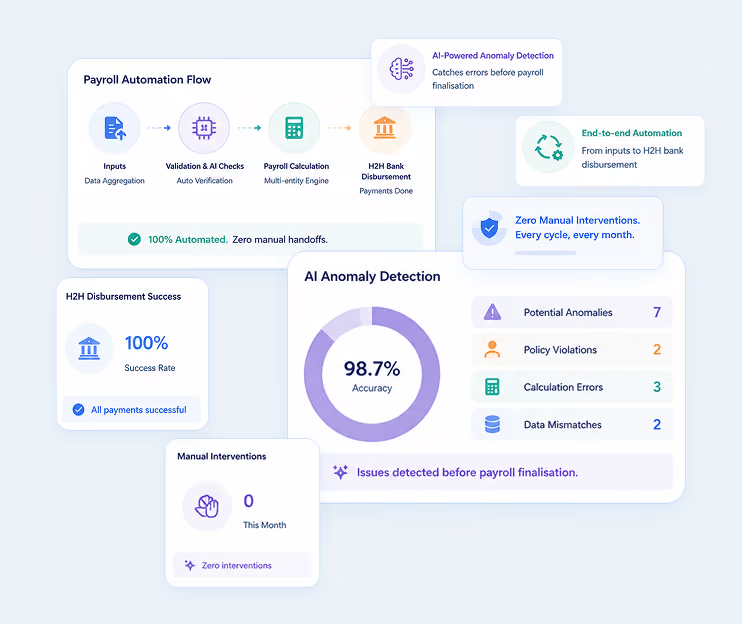
ZingHR runs payroll in-house in the Philippines, without a partner layer. Statutory contributions, withholding tax, 13th month pay and holiday premiums are computed in the same pay run. Each work location carries its own minimum wage, so a new wage order updates once and reaches every affected employee.
2. Time, Attendance and Leave
Shift rosters, biometric and geo-tagged attendance and leave policies sit in one module. Overtime, night shift and rest day hours are tagged as they are logged, so premiums arrive in payroll already classified.
Maternity, paternity, solo parent and service incentive leave each follow their statutory rules, and employees file requests from the ZingHR mobile app.
3. Records and Compliance Visibility
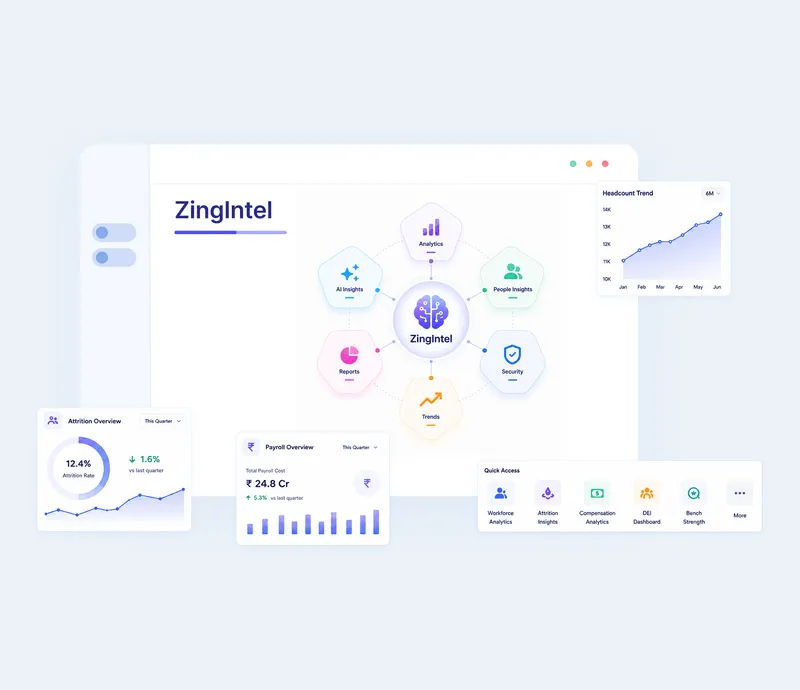
Employee files, contracts and disciplinary notices stay in one record, including the documents a twin-notice process requires. Dashboards in the Zing Intelligence Hub show remittances, leave balances and overtime trends by entity, so HR leaders can spot problems before an inspection.
Staying Compliant With the Labor Code of the Philippines
The Labor Code of the Philippines has been in force for more than 50 years, but the figures employers apply under it change every year. Wage orders, contribution tables and holiday proclamations each shift payroll results, often with only weeks of notice.
Employers that map each provision to a payroll rule, a record and an owner pass inspections with far less disruption. ZingHR, the fastest growing HCM and payroll platform in the Philippines, gives Philippine employers that structure on one DOLE-compliant platform.
See every compliance issue by entity in ZingHR. Schedule a demo today.
Frequently asked questions (FAQs)
Yes. The Telecommuting Act, Republic Act No. 11165, requires employers to give telecommuting employees the same treatment as comparable on-site workers. The rule covers minimum wage, overtime, rest periods, leave and access to training.
No. Article 82 excludes managerial employees and officers or members of the managerial staff from the Code's rules on hours of work, overtime and holiday pay. Employers can still grant these benefits through employment contracts or company policy.
Yes. A resigned or separated rank-and-file employee receives 13th month pay in proportion to the basic salary earned during the year. ZingHR computes the pro-rated amount automatically as part of final pay.
Article 300 requires at least one month's written notice, which the employer may waive. An employee can resign without notice for causes such as serious insult, inhuman treatment or a crime committed against them by the employer.
Article 303 sets a fine of ₱1,000 to ₱10,000, imprisonment of three months to three years or both, on top of paying the claims due. Existing laws such as Republic Act No. 11058 carry their own administrative fines.
Yes. ZingHR links each employee to a work location and its current wage order. When an RTWPB issues a new order, the rate updates for that location and flows into the next pay run without manual rework.
What to do next?
See ZingHR in Action
Join the 1,200+ enterprises that have replaced fragmented HR with one intelligent, future-ready platform. See ZingHR in 30 minutes.
Build the Organization You Want
Great HR drives retention, capability, and culture. ZingHR takes care of the operational layer so your people team owns the strategy.

Caroline D.
Revenue Operations Lead- SEA
Caroline leads Revenue Operations for SEA at ZingHR, driving strategic growth and operational excellence across Southeast Asian markets. She's passionate about leveraging data-driven insights and enterprise solutions to empower regional expansion and operational efficiency.

Elevating Impact.
Defining Destiny
See how ZingHR's AI-powered Hire-to-ReHire platform frees your CPO to lead with purpose and deliver the outcomes your Board is watching for


ZingHR is the AI-powered Hire-to-ReHire platform built for one purpose to remove every transactional layer of HR from your organisation, permanently.