Strategic Workforce Planning in the UAE: A Practical Guide for HR Leaders
UAE companies are buying, diversifying and automating faster than annual headcount plans can keep up. A practical guide to strategic workforce planning built for the UAE.


Table of contents
One unstitched HR platform to manage your entire workforce, from Hire to Re-Hire.
Talent Management solutions built for growing and exceptional people
Built-in compliance tools that update with changing regulations
Automated payroll, attendance, and leave management
Insights that help HR leaders make faster, better decisions

Key Takeaways
- Strategic workforce planning links business strategy to the roles, skills, locations and costs a company needs over the next three to five years.
- Operational planning fills this year's open roles, while strategic planning decides which capabilities the business will need next and how to get them.
- The strategic workforce planning process runs in six steps, from translating strategy to refreshing the plan each quarter.
- UAE plans have to account for Emiratisation, visa lead times, end-of-service liabilities and multi-entity structures across mainland and free zones.
- ZingHR gives UAE employers one workforce record, live dashboards and Ghrowth.ai for agentic intelligence, so plans run on current data.
UAE companies are reshaping themselves faster than most annual headcount plans can track. In PwC's 29th Global CEO Survey, 74% of UAE chief executives expected to make one or more significant acquisitions within three years, against 41% globally. Nearly 70% had already moved into new sectors over the previous five years.
The same survey found almost half of UAE CEOs spend most of their time on activities with a horizon of under a year. Workforce plans often follow the same pattern. They budget next year's headcount but say little about the skills a new business line or acquisition will need in year three.
Strategic workforce planning helps close that mismatch. It gives HR and finance a shared, multi-year view of the workforce the strategy depends on, and a process to keep that view current.
What Is Strategic Workforce Planning?
Strategic workforce planning is the process of matching a company's future workforce to its business objectives and overall business strategy, usually over a three to five year horizon. It looks past next year's vacancies to the capabilities the business will need, then decides how to build, hire, borrow or automate them.
Good strategic workforce strategies set out four things:
- The capabilities the business needs to deliver its strategy
- The number of people and skills those capabilities require
- Where those people should sit, by entity, emirate and location
- The full cost of that workforce, including pay, benefits and end-of-service accruals
The output is a set of scenarios, shortfalls and actions that leadership reviews alongside the financial plan.
Why Strategic Workforce Planning Matters for UAE Employers
Global pressures on workforce planning are sharper in the UAE because growth, regulation and workforce mix all move quickly at once, so the benefits of strategic workforce planning show up sooner here than in slower markets.
- Growth through deals and new sectors: Acquisitions and diversification bring new roles, duplicate functions and integration work that a one-year plan rarely captures.
- Leaner structures: Gartner's July 2026 CHRO survey found 67% of CHROs face higher productivity expectations, while companies remove middle management layers and hire fewer entry-level staff.
- Emiratisation commitments: Hiring targets for UAE nationals in skilled roles need multi-year pipelines built well ahead of each deadline.
- Mobility lead times: Hires from abroad usually need visas, medical checks and relocation, which adds weeks to every critical hire.
- Long-term cost exposure: End-of-service gratuity builds with tenure, so today's hiring mix shapes liabilities for years.
Also read: The 8 Best Payroll Software UAE Platforms to Compare (Top Picks)
Operational vs Strategic Workforce Planning
Operational vs strategic workforce planning is a question of horizon and purpose. Operational planning keeps the current business staffed. Strategic planning prepares the workforce for the business the company is becoming.
Operational vs strategic workforce planning across six dimensions
The two are linked. Strategic decisions set the direction, and operational plans carry them out each year through hiring, scheduling and budgets. Rosters and attendance data from attendance management systems feed back into the strategic view, showing where capacity runs short in practice.
Also read: Workforce Management Software UAE: Top 8 Platforms Compared (2026)
The Strategic Workforce Planning Process in 6 Steps
The strategic workforce planning process works best as a repeating annual cycle. The six steps below take a plan from strategy to action and back again.
Step 1: Translate Strategy Into Capabilities
Start with the business plan before looking at the org chart. Work with leadership to turn each strategic goal into the capabilities it needs, using four questions:
- Which markets, products or services will grow or shrink?
- Which acquisitions or new entities are planned?
- Which processes are likely to be automated?
- Which capabilities set the business apart from competitors?
Step 2: Baseline the Current Workforce
Build an accurate picture of the workforce today, across every entity. PwC's survey found only 29% of CEOs globally say their data is fully accessible to AI systems, and the same data problem affects workforce planning.
- Headcount by entity, emirate, grade and job family
- Nationality mix and Emiratisation status
- Skills, certifications and performance ratings
- Visa and contract expiry dates
- Fully loaded cost, including allowances and gratuity accruals
Workforce analytics tools help here, but only if the underlying records are clean and reconciled.
Step 3: Model Demand Scenarios
Forecasting future workforce needs works best by scenario, since a growth plan and an automation plan call for different roles. Three scenarios usually give leadership enough range without overloading the plan:
- A base case built on the current business plan
- A growth case that adds planned acquisitions or new sectors
- An automation case that reflects AI and process changes
For each scenario, estimate roles, skills, locations and cost by year.
Step 4: Analyse Shortfalls and Surpluses
Compare each demand scenario with the current baseline, adjusted for expected attrition and retirements. The differences usually fall into three groups:
- Shortages of skills or people in growing areas
- Surpluses in roles that will shrink or be automated
- Location mismatches where talent sits in the wrong entity or emirate
Step 5: Choose Build, Buy, Borrow or Automate
Each shortfall needs a decision on how to fill it. The right lever depends on time, cost and how central the skill is to the strategy.
Workforce levers for filling shortfalls in a strategic workforce plan
Future talent needs special care. Gartner predicts that by 2027, 50% of organisations without a people-centric AI strategy will lose their top AI talent to competitors.
Step 6: Monitor and Refresh
Review the plan every quarter and rebuild it once a year with the budget. Track a small set of measures that show whether the plan is on course:
- Time to fill critical roles
- Internal fill rate for priority positions
- Attrition in critical skill groups
- Emirati representation and retention by entity
- Workforce cost against plan
Give each measure a named owner and a target for the year, so the quarterly review ends in decisions.
UAE Factors That Shape a Strategic Workforce Plan
A plan copied from another market will miss several UAE-specific constraints. Each one changes the timing or cost of filling a shortfall.
1. Emiratisation Pipelines
Private companies with 50+ employees must reach 10% UAE nationals in skilled roles by the end of 2026. Smaller companies in 14 designated sectors have their own hiring obligations. Strategic plans should map which roles suit Emirati graduates and experienced hires, and how internal mobility will keep them.
2. Visa and Relocation Lead Times
Hiring from abroad adds visa processing, medical tests and relocation to every offer. Plans should build these weeks into time-to-fill targets for critical roles, especially when an acquisition or new site has a fixed launch date.
3. End-of-Service Liabilities
End-of-service gratuity under Federal Decree-Law No. 33 of 2021 is calculated on basic salary and grows with service. Workforce scenarios should include accrued gratuity, since restructuring a long-tenured team carries a cost that new hires do not.
4. Mainland and Free Zone Entities
Groups often run mainland companies alongside entities in free zones such as DIFC or ADGM, each with its own employment rules. A strategic plan needs one view across all of them, with rules applied by entity.
For most mainland staff, employment law in the UAE sets the baseline.
Common Strategic Workforce Planning Mistakes
Plans fail in predictable ways. The mistakes below come up across sectors and company sizes.
- Planning headcount instead of capabilities: A headcount target hides which skills are missing and which roles will shrink.
- Working from stale data: Plans built on last quarter's exports miss transfers, exits and new hires across entities.
- Leaving finance out: Without shared cost assumptions, workforce and financial plans contradict each other by mid-year.
- Ignoring internal talent: Companies hire externally for skills they already have in another entity or business unit.
- Treating the plan as a document: A plan reviewed once a year cannot keep up with deals, new sectors and AI-driven change.
How ZingHR Supports Effective Strategic Workforce Planning in the UAE
ZingHR is an agentic intelligence HCM platform for boards, CHROs and CXOs running multi-entity organisations. Across the region, Teleperformance, Burjeel, SGS and Shapoorji Pallonji plan and manage their workforces on it, from contact-centre floors to hospital wards and project sites.
1. One Workforce Record Across Entities
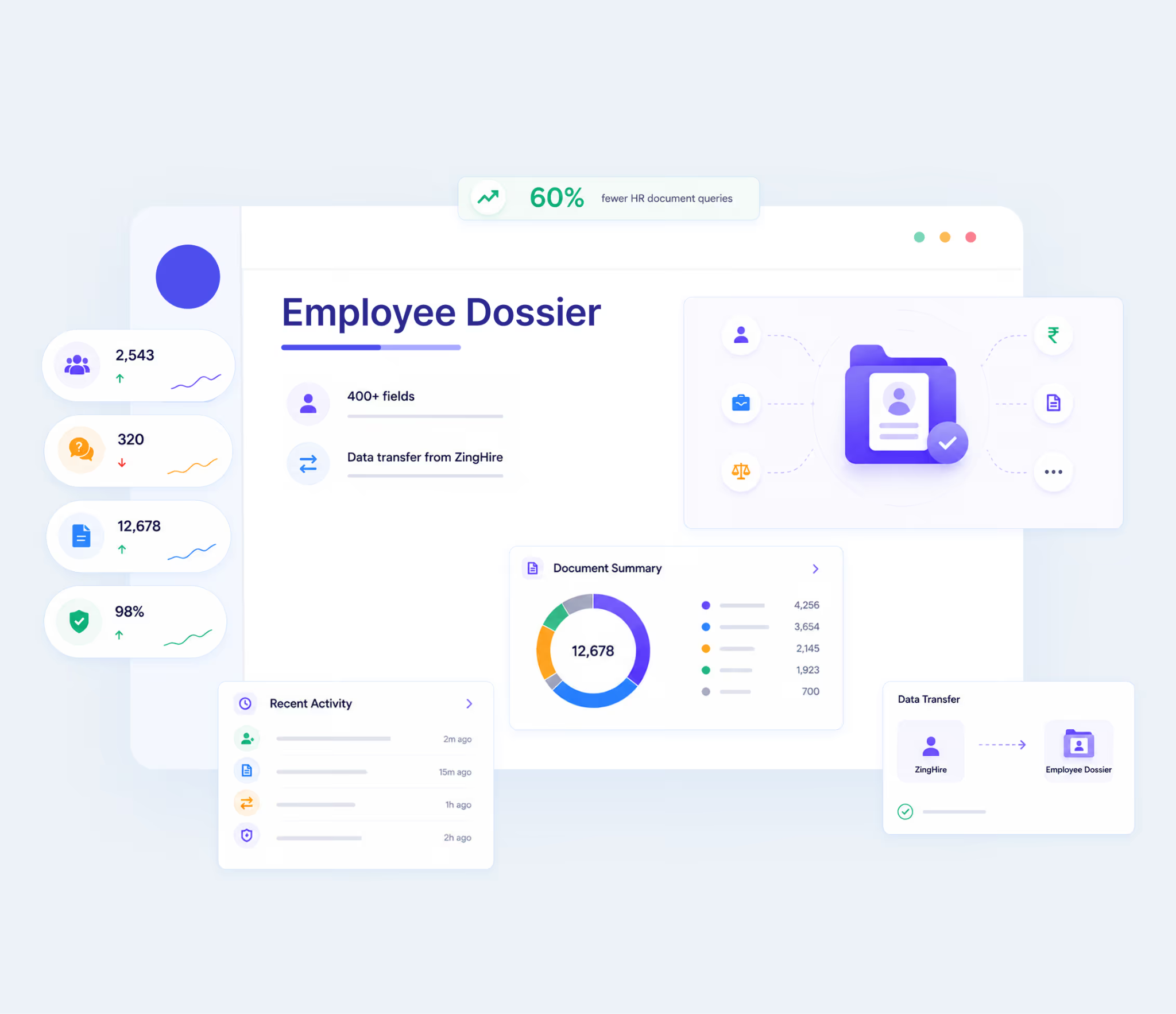
HR Launchpad holds each employee's record with 400+ configurable fields, including grade, nationality, visa and contract dates. Every module reads from the same database, so the baseline for a strategic plan is current on the day it is pulled.
2. Live Planning Views With Ghrowth.ai
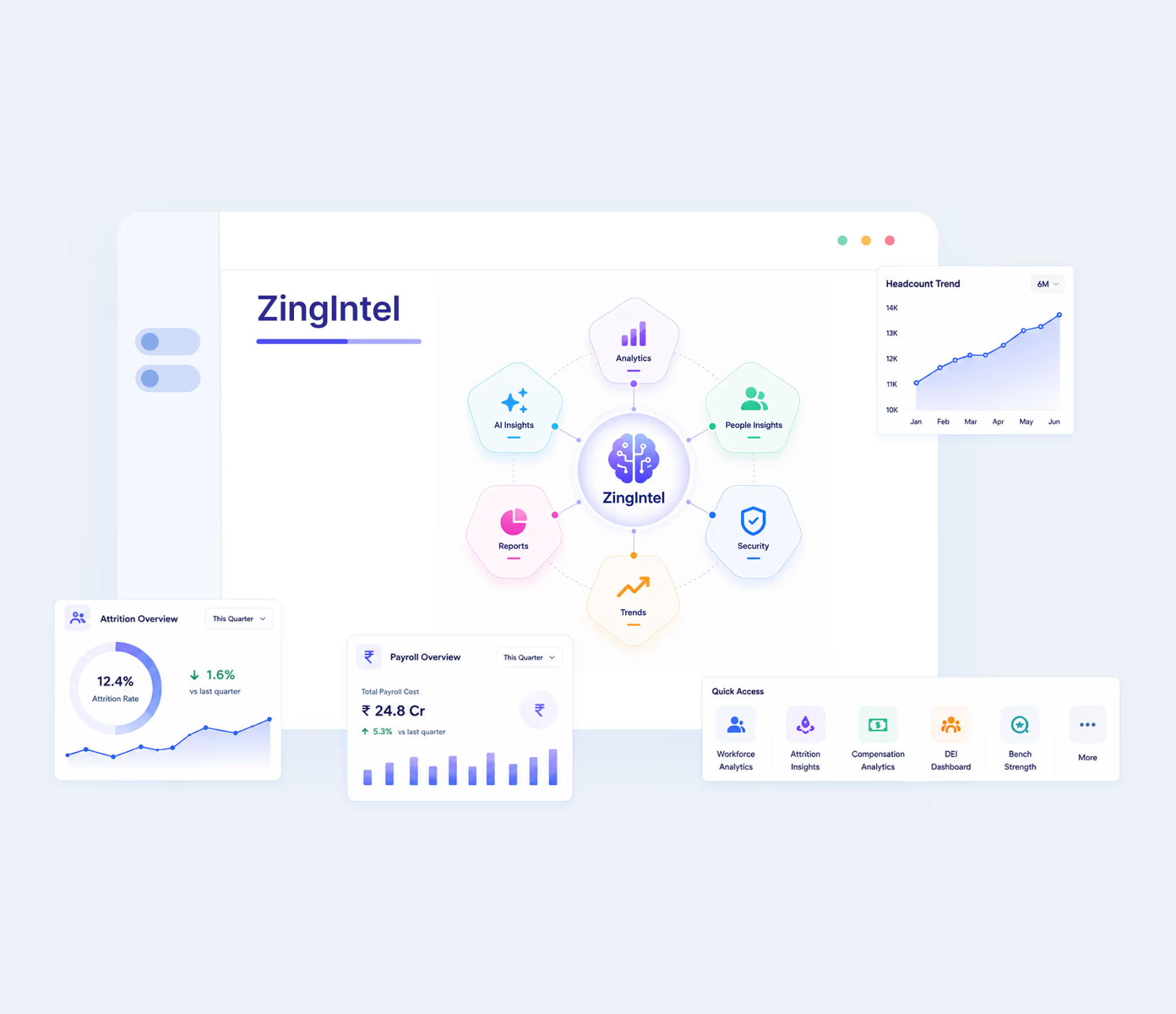
Zing Intelligence Hub dashboards show headcount, cost, attrition and Emiratisation by entity, with row-level security for each persona. Ghrowth.ai lets CXOs ask planning questions in plain language, such as which business unit loses the most people in critical roles. It then tracks the actions that follow.
Also read: HR Analytics Software: 8 Best Enterprise Tools UAE
3. Skills, Performance and Succession
ZingGrow links goals, reviews and calibration, giving planners a skills and performance view of each team. The records support build decisions, internal moves and succession plans for critical roles.
Making Strategic Workforce Planning Part of the Annual Cycle
Strategic workforce planning works best when it sits inside the business calendar. Tie the annual plan to the budget, review it each quarter and adjust it whenever a deal, new entity or regulatory change shifts the picture.
Start small if needed. Pick the two or three current workforce capabilities your strategy depends on most and build clean data for those roles. Extend the approach once leadership sees the value.
Annual plans built on exported spreadsheets are out of date before approval. ZingHR's HCM platform keeps people, payroll and cost data current across every UAE entity. Plan next year's workforce on current data. Book a demo today.
Frequently asked questions (FAQs)
Three to five years suits most organisations. Fast-changing sectors such as technology may plan in detail for two to three years, with broader scenarios beyond that, and refresh assumptions every quarter.
The CHRO usually leads, with the CFO as co-owner for cost and business unit heads for demand. HR business partners run the process within each unit and feed operational data back into the plan.
Yes. A company with 100 employees can run a lighter version: one scenario, a list of critical roles and a yearly review. The discipline matters more than the size of the model.
AI changes both demand and method. It automates some tasks, creates new roles and speeds up analysis. Plans need an automation scenario and clear rules on which decisions stay with people.
Yes. ZingHR holds all entities on one database, and Zing Intelligence Hub dashboards filter headcount, cost and Emiratisation by entity. Row-level security controls who sees each view.
ZingHR payroll records hold basic salary, allowances and gratuity accruals by employee and entity. Planners can use that data to cost scenarios against actual pay instead of averages.
What to do next?
See ZingHR in Action
Join the 1,200+ enterprises that have replaced fragmented HR with one intelligent, future-ready platform. See ZingHR in 30 minutes.
Build the Organization You Want
Great HR drives retention, capability, and culture. ZingHR takes care of the operational layer so your people team owns the strategy.
Dr. Anupama Iyer
Director — HR
Dr. Anupama Iyer is Director — HR at ZingHR and an accomplished HR leader, consultant, facilitator, and academic with over two decades of experience in people practices and talent development. Her work spans HR consulting, training design, leadership development, and academia. Bringing both a practitioner's and an educator's perspective, she is passionate about building people-centric workplaces and helping organizations create cultures that enable growth, employee development, and long-term success.

Elevating Impact.
Defining Destiny
See how ZingHR's AI-powered Hire-to-ReHire platform frees your CPO to lead with purpose and deliver the outcomes your Board is watching for


ZingHR is the AI-powered Hire-to-ReHire platform built for one purpose to remove every transactional layer of HR from your organisation, permanently.