Strategic Workforce Planning for a Future-Ready Organization
Practical guide to building a future-ready workforce through Strategic Succession Planning


Table of contents
One unstitched HR platform to manage your entire workforce, from Hire to Re-Hire.
Talent Management solutions built for growing and exceptional people
Built-in compliance tools that update with changing regulations
Automated payroll, attendance, and leave management
Insights that help HR leaders make faster, better decisions

Key Takeaways
- Strategic workforce planning (SWP) is a continuous process that aligns workforce supply, demand, skills, cost, and availability with long-term business goals.
- It matters most to CHROs, HR operations teams, HRBPs, and workforce management teams in large, distributed, or regulated organizations.
- Effective SWP follows a structured six-step framework: define demand, build a baseline, identify gaps, forecast scenarios, build action plans, and track with analytics.
- SWP is only as strong as the data behind it; fragmented HR systems are the most common reason enterprise planning breaks down.
- ZingHR unifies core HR, payroll, attendance, performance, talent, engagement, and analytics into a single AI-powered HCM platform, giving HR leaders one system of record and action across the Hire-to-reHire lifecycle.
For enterprise HR leaders, strategic workforce planning is an ongoing operating discipline that connects business goals with workforce capacity, skills, cost, compliance, and talent readiness. As an HR leader, you have likely been asked a critical question: "Do we have the right people, skills, and capacity to meet our future business goals?"
When workforce data is fragmented across HR, payroll, attendance, performance, and talent systems, planning becomes reactive. HR teams spend time reconciling reports instead of uncovering workforce trends, forecasting future needs, and enabling managers to act. Strategic workforce planning replaces that reactive cycle with a structured, data-backed approach to building the workforce your organization will need next.
This guide explains what strategic workforce planning is, why it matters, how to implement it, and how ZingHR's AI-powered Hire-to-ReHire HCM platform can help enterprises plan with greater clarity and confidence.
Why Strategic Workforce Planning Matters for Enterprise HR
For CHROs and HR operations teams, workforce planning must account for distributed teams, frontline availability, payroll cost, compliance exposure, skills visibility, succession risk, and manager adoption. A retail chain planning seasonal store staffing, a manufacturing plant ramping for festive demand, a BFSI lender hiring compliance-critical roles, and a hospital network managing shift coverage all face the same underlying challenge: getting the right capacity and capability in place before business execution is affected.
These decisions require connected workforce data rather than disconnected reports and manual spreadsheets. When headcount, skills, attendance, payroll, and attrition risk live in one place, HR leaders can move from reacting to vacancies to anticipating them.
What is Strategic Workforce Planning?
Strategic workforce planning is the process of aligning workforce supply, demand, skills, cost, and availability with an organization's long-term business goals. It helps HR leaders forecast talent needs, identify capability shortages, and create plans for hiring, development, internal mobility, and succession.
Instead of making workforce decisions only after staffing challenges emerge, this approach enables enterprise HR teams to anticipate future requirements and prepare accordingly. For example, if an enterprise is expanding into a new region, HR leaders must plan required roles, hiring timelines, local compliance obligations, payroll impact, manager capacity, and skill availability before the new location goes live. This must all be done while ensuring current operations and teams are not disrupted.
The ultimate goal of strategic workforce planning is to align your people strategy with your organization's business strategy so the workforce is ready for what comes next. Whether the change is market disruption, geographic expansion, or a shift in operating model, a solid workforce plan keeps HR one step ahead.
Why Strategic Workforce Planning Needs Unified HR Data
Workforce planning is only as strong as the data behind it. When headcount, attendance, payroll, performance, hiring, and engagement data sit in separate systems, HR teams spend more time reconciling information than planning ahead. A unified HCM platform gives CHROs and HR teams a single view of workforce readiness and helps them turn insights into action.
This is where connected workforce management data becomes foundational. Visibility into attendance, availability, shift coverage, and capacity across distributed teams allows HR leaders to model real supply. Combined with workforce analytics, enterprises can forecast headcount, skills, attrition, and workforce cost from a single source of truth rather than from manually compiled spreadsheets.
Benefits of Strategic Workforce Planning
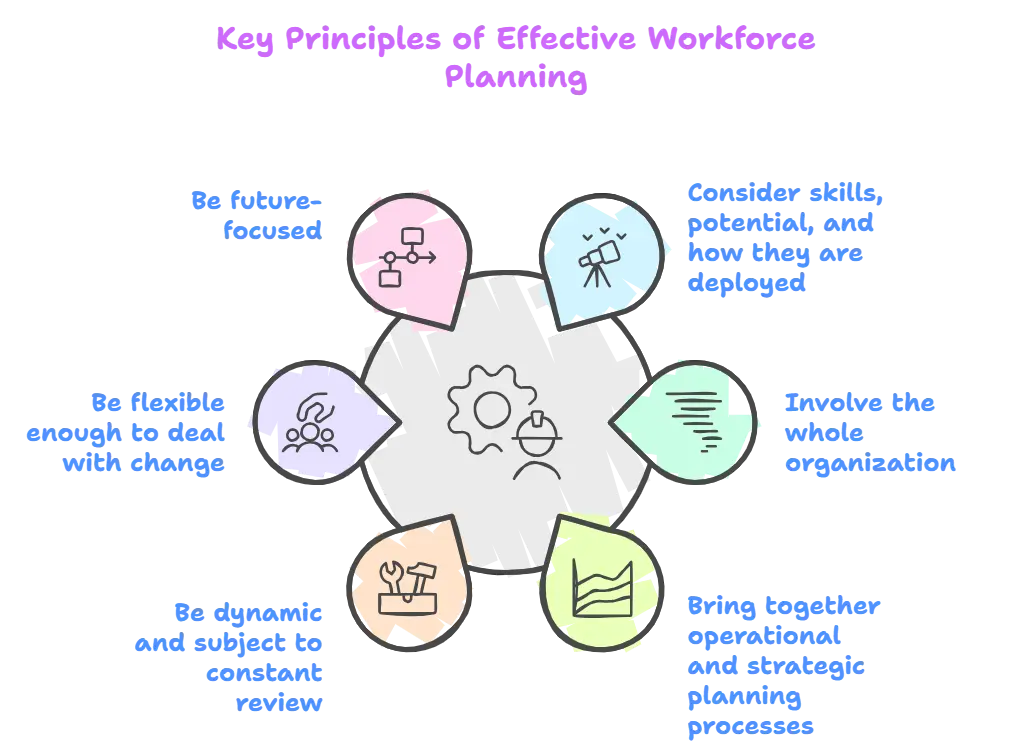
Although workforce planning is often treated as an operational exercise, its impact is strategic. When workforce plans are built on accurate data, HR leaders can reduce risk, improve agility, control costs, and prepare the organization for future capability needs.
1. Aligning Workforce Capacity with Business Strategy
Every enterprise has growth, productivity, cost, and continuity goals that depend on having the right workforce capacity and capabilities in place. Some organizations want to launch new products, others to enter new markets or expand geographic presence. None of these goals are achievable without the right roles, skills, and locations covered.
Strategic workforce planning helps HR leaders translate business priorities into hiring, development, mobility, and succession plans.
2. Anticipating Future Needs
Change is constant in business; client expectations evolve, markets change, and operating models adapt. Strategic workforce planning helps HR teams prepare for expansion, changing customer demand, new operating models, and market dynamics before workforce shortages affect execution.
3. Improving Organizational Agility
Business priorities, market conditions, and workforce trends can evolve rapidly. Strategic workforce planning helps organizations respond with confidence by giving business leaders a clear view of current workforce capabilities, future talent needs, and areas where additional skills will be required. Instead of making workforce decisions in response to immediate challenges, HR teams can develop informed strategies that support long-term organizational goals.
For example, during the pandemic, companies with solid workforce management plans switched to remote work quickly, allowing operations to continue smoothly while less-prepared organizations struggled to cope.
4. Reducing Workforce Risk
Over-staffing and under-staffing both cost the organization time, money, and productivity. Strategic workforce planning helps maintain balance across the workforce. This ensures your workforce is ready to manage demand during peak periods while avoiding unnecessary cost during slower cycles.
For example, a manufacturing company preparing for festive-season demand uses strategic workforce planning to onboard temporary labor ahead of schedule, preventing production delays while keeping costs under control.
5. Improving Workforce Cost Visibility
Enterprise workforce decisions affect payroll cost, hiring budgets, productivity, and compliance exposure. Strategic workforce planning helps HR and finance teams make better decisions about where to hire, redeploy, automate, or develop talent.
For a logistics or retail operator running thousands of frontline roles across locations, even small improvements in cost visibility translate into significant savings.
6. Strengthening Succession and Leadership Readiness
By connecting performance, potential, skills, and role-criticality data, HR leaders can identify succession risks earlier and prepare future leaders before business continuity is affected. Structured succession planning ensures that critical roles never sit exposed when a key leader leaves or an unexpected vacancy appears.
6 Steps to Implement Strategic Workforce Planning
Strategic workforce planning works best as a structured sequence that CHROs, HR operations teams, and HRBPs can apply consistently. The framework below moves from business demand through to continuous analytics tracking.
1. Define Business Priorities and Workforce Demand
Start by translating business strategy into workforce demand. Are you expanding into new regions, launching a new product, or diversifying your customer base? Each priority implies specific roles, skills, locations, and capacity. Document required headcount, timelines, and budget assumptions so the plan is anchored to clear business objectives rather than guesswork.
2. Build a Current Workforce Baseline
Audit your existing workforce: headcount by role, role coverage, performance, and skills. Use HRIS data alongside performance and talent management data and balance it with manager insights and employee sentiment. A clear baseline tells you exactly what capability you have today before deciding what to hire, develop, or redeploy.
3. Identify Skill, Capacity, and Role Gaps
Skills are the backbone of any workforce, but demand evolves over time. Compare your current workforce against forecasted demand to identify where additional capacity, skills, or resources will be needed across workforce size, structure, cost, and capabilities.
For example, if your organization is adopting AI-powered solutions, your workforce plan may highlight the need for expertise in machine learning, data analytics, and AI-enabled customer engagement. Building these capabilities helps teams remain competitive today and prepared for future business demands.
4. Forecast Future Workforce Scenarios
The next step in the strategic workforce planning process involves forecasting how workforce needs may change over time. HR teams should use scenario planning and scenario modelling to evaluate different business outcomes, such as future growth, market changes, or economic downturns, and assess their impact on future talent needs.
Forecasting multiple scenarios helps organisations anticipate workforce trends, adjust workforce planning proactively, and develop talent strategies that support long-term organisational goals while mitigating risks.
5. Create Hiring, Development, Mobility, and Succession Plans
Use workforce planning insights to guide strategic hiring, upskilling, internal mobility, automation, or restructuring. Balance experienced leaders in critical roles with high-potential employees who can grow into them, building a workforce that combines proven judgment with fresh perspectives.
Beyond skills and experience, also consider attributes such as adaptability, resilience, and collaboration that align with your organization's culture and values.
6. Track Progress with Workforce Analytics
HR teams should monitor key workforce metrics to measure progress, identify emerging talent needs, and adjust workforce plans as business priorities evolve. Workforce analytics and data-driven insights help business leaders evaluate whether workforce strategies continue to support organizational goals.
Track metrics such as employee turnover, internal mobility, skills development, hiring outcomes, and workforce productivity. Monitoring your employee attrition rate alongside other workforce indicators provides valuable insight into retention trends and highlights areas that require action.
Workforce Planning Challenges Enterprise HR Teams Face
In large organizations, workforce planning often breaks down because HR teams are working across fragmented systems, outdated reports, and manual processes. CHROs and HR operations leaders need real-time visibility into headcount, skills, attendance, payroll, performance, and attrition risk to make confident workforce decisions.
1. Fragmented Workforce Data
When HR, payroll, attendance, performance, hiring, and engagement data sit in separate systems, HR teams struggle to build an accurate view of workforce supply and demand. Without a unified view of workforce capabilities, performance, and attrition, organizations cannot accurately assess workforce readiness or forecast future talent needs.
2. Limited Skills Visibility
Without a structured view of employee skills, certifications, performance, and potential, HR leaders cannot accurately evaluate workforce capabilities or prioritize development initiatives. This is especially critical in regulated sectors such as BFSI and healthcare, where specific certifications and compliance-critical skills determine who can perform a role.
3. Reactive Hiring and Workforce Decisions
Many organizations address talent needs only after a role becomes vacant or demand spikes. This increases hiring pressure, cost, and productivity risk, which forces HR teams to make rushed decisions that compromise quality.
4. Manual Planning Processes
Spreadsheet-led planning slows decision-making and increases the risk of errors, especially across large, distributed, or multi-location workforces. For example, a logistics operator coordinating frontline staff across dozens of hubs cannot maintain accurate, real-time plans through manual consolidation alone.
5. Compliance and Workforce Cost Complexity
Enterprise workforce planning must account for labor regulations, payroll obligations, overtime, attendance, and location-specific compliance requirements. Keeping up with constantly changing labor laws across multiple states or countries adds risk and cost. It also naturally points toward the need for a connected platform that keeps planning, payroll, and compliance aligned.
How ZingHR Supports Strategic Workforce Planning
ZingHR helps enterprise HR teams plan and act with greater confidence by bringing core HR, workforce management, payroll, talent, engagement, automation, and analytics into one AI-powered HCM platform. This gives HR leaders, managers, employees, and leadership a single system of record and action across the Hire-to-reHire lifecycle.
1. Unified Workforce Data
ZingHR brings core HR, attendance, payroll, performance, talent, and engagement data into one HCM platform, giving HR leaders a clearer view of workforce capacity, cost, skills, and readiness. Instead of reconciling reports from disconnected tools, HR operations teams build their workforce baseline from a single source of truth.
2. AI-Powered Talent Decisions
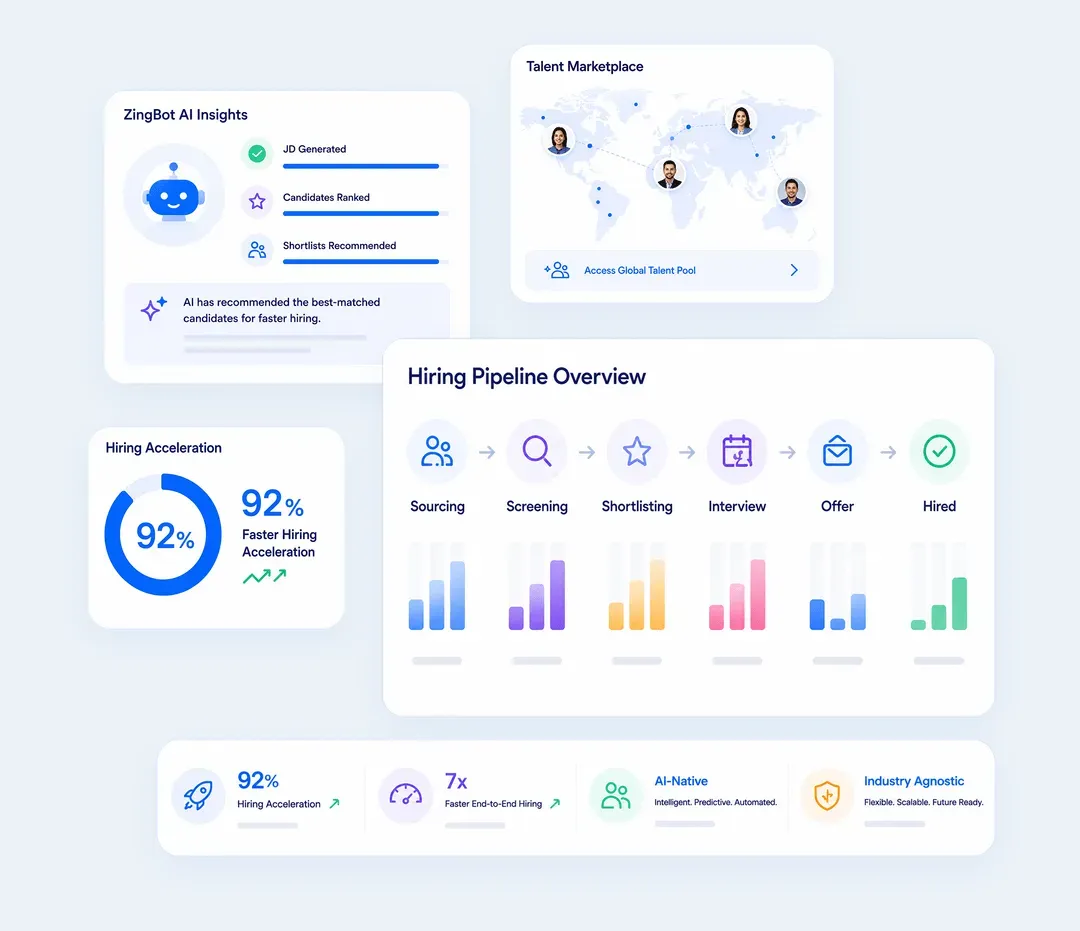
With AI-enabled screening, robotic interviews, and digital onboarding, ZingHR's Talent Acquisition capabilities help HR teams reduce hiring delays and identify candidates aligned to future workforce needs. In practice, organizations using AI-assisted screening can cut time-to-hire significantly, freeing recruiters to focus on critical and hard-to-fill roles.
3. Skills, Performance, and Succession Visibility
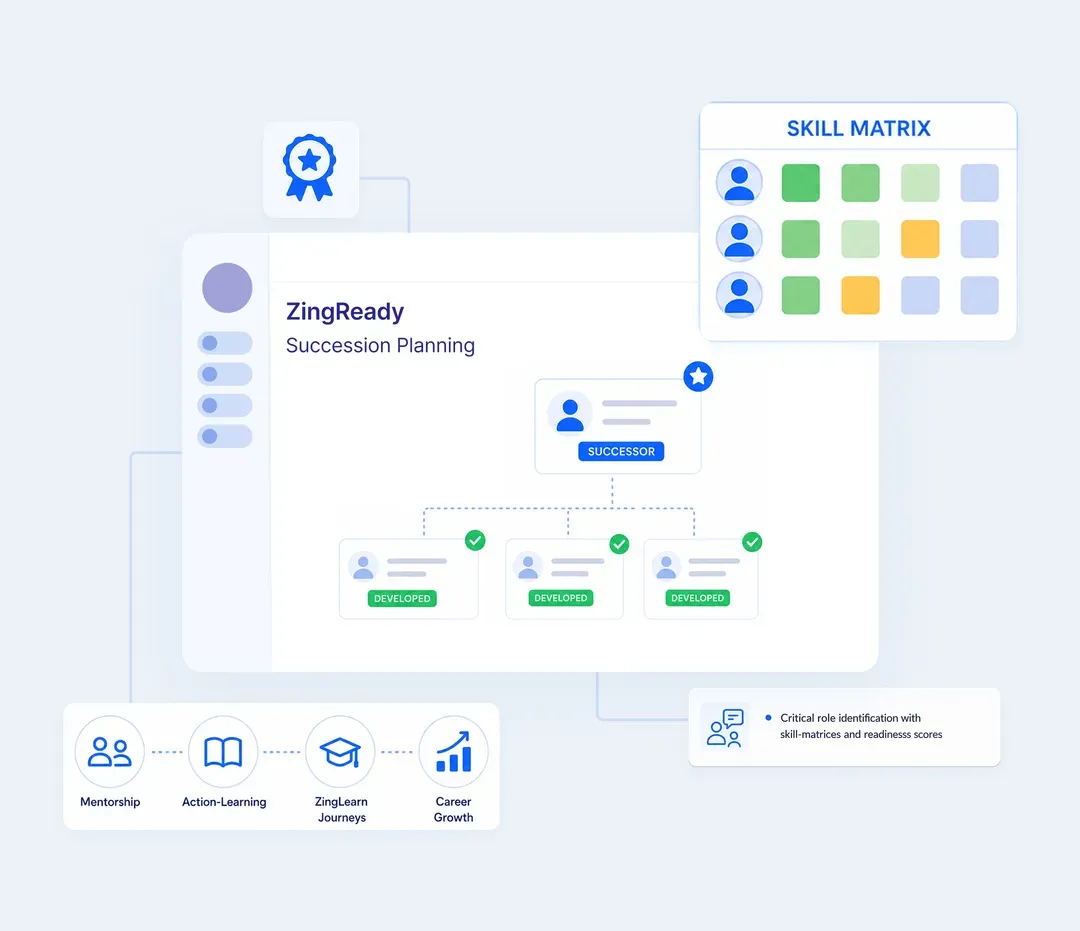
ZingHR's Talent Management solution helps HR teams identify areas where employees may need additional skills, development, or succession support. Built-in tools for goal-setting, 360-degree feedback, OKRs, and skills, performance, and succession planning help HR leaders understand workforce strengths and growth opportunities.
For example, if a leadership pipeline is thin, ZingHR helps build development strategies to groom the organization's future leaders.
4. Automated Workforce Operations
Zero-touch payroll, attendance, leave, and compliance workflows reduce transactional HR effort, allowing HR teams to focus on strategic workforce planning rather than manual administration.
Automated, accurate payroll eliminates the errors that erode trust, while built-in compliance workflows keep the organization aligned with changing labor regulations and help avoid penalties. Engagement tools such as rewards and recognition, surveys, and feedback mechanisms strengthen employee engagement and retention, supporting workforce continuity.
5. Analytics for Faster Workforce Decisions
ZingHR's workforce analytics help CHROs, HRBPs, and leadership teams make faster decisions on headcount, attrition, engagement, skills, and workforce cost. Real-time analytics turn fragmented data into forecastable insight, so plans can be adjusted continuously as business conditions shift.
Why Choose ZingHR Strategic Workforce Planning Software?
Strategic workforce planning requires more than spreadsheets and disconnected HR systems. Organisations need a unified platform that connects workforce data, talent management, hiring, performance, learning, and analytics to support faster, data driven decision making.
ZingHR helps HR leaders align workforce strategies with organisational goals by providing a single platform to:
- Assess current workforce capabilities and identify critical roles.
- Forecast future talent needs through workforce analytics and data driven insights.
- Identify talent gaps and support talent development with integrated performance and learning tools.
- Strengthen succession planning to prepare employees for future roles.
- Improve workforce agility with real-time dashboards and actionable business data.
- Support agile workforce planning by connecting recruitment, talent management, payroll, workforce management, and employee experience in one AI-powered HCM platform.
Whether your organisation is preparing for future growth, responding to market changes, or refining long-term talent strategies, ZingHR provides the tools to help HR teams make informed strategic decisions and continuously adjust workforce planning as business needs evolve.
Ready to build a workforce that supports your long-term business strategy? Book a demo with ZingHR today.
Frequently asked questions (FAQs)
Most authoritative models converge on five to six core steps: define business priorities and workforce demand, build a current workforce baseline, identify skill and capacity gaps, forecast future scenarios, develop hiring/development/mobility/succession action plans, and track progress with workforce analytics. The key is connecting each step to measurable outcomes such as time-to-hire, turnover, workforce cost, and skill coverage by role.
A demand-side model projects future staffing needs primarily from business strategy, growth forecasts, and market trends. For example, modeling headcount for a new product launch. A supply-side model focuses on current internal capacity, including skills inventories, retirement risk, and internal mobility. A balanced model integrates both, comparing forecasted demand against projected supply through scenario-based gap and cost analysis. Most large, distributed enterprises benefit from a balanced approach.
Strategic workforce planning operates on a multi-year horizon, often one to three years or more, and is tightly aligned to corporate strategy, digital transformation, and long-term skill needs. Operational workforce planning focuses on near-term scheduling, shift coverage, and short-range hiring to meet day-to-day workload fluctuations. Strategic planning asks "what roles and skills will we need in three years?", while operational planning asks "how many people do we need next quarter or next week?"
Effective planning depends on a mix of workforce, talent, and financial data, including headcount by role, turnover and attrition rates, time-to-hire, vacancy rates, and cost per hire. Mature organizations also track skills inventories, proficiency levels, internal mobility, succession readiness, and scenario-specific labor cost projections. Unifying this data on a single HCM platform makes it possible to forecast and simulate scenarios rather than react after the fact.
Treat strategic workforce planning as a living process: conduct at least an annual major refresh with quarterly reviews to incorporate new data and shifting business priorities. Assumptions should be revisited whenever market, technology, or operating conditions change materially. Continuous monitoring through workforce analytics ensures plans stay aligned with reality instead of becoming a static document.
What to do next?
See ZingHR in Action
Join the 1,200+ enterprises that have replaced fragmented HR with one intelligent, future-ready platform. See ZingHR in 30 minutes.
Build the Organization You Want
Great HR drives retention, capability, and culture. ZingHR takes care of the operational layer so your people team owns the strategy.
Dr. Anupama Iyer
Director — HR
Dr. Anupama Iyer is Director — HR at ZingHR and an accomplished HR leader, consultant, facilitator, and academic with over two decades of experience in people practices and talent development. Her work spans HR consulting, training design, leadership development, and academia. Bringing both a practitioner's and an educator's perspective, she is passionate about building people-centric workplaces and helping organizations create cultures that enable growth, employee development, and long-term success.

Elevating Impact.
Defining Destiny
See how ZingHR's AI-powered Hire-to-ReHire platform frees your CPO to lead with purpose and deliver the outcomes your Board is watching for


ZingHR is the AI-powered Hire-to-ReHire platform built for one purpose to remove every transactional layer of HR from your organisation, permanently.