Strategies for Employee
Strategies for Employee Growth and Career Development
Strategies for Employee Growth and Career Development
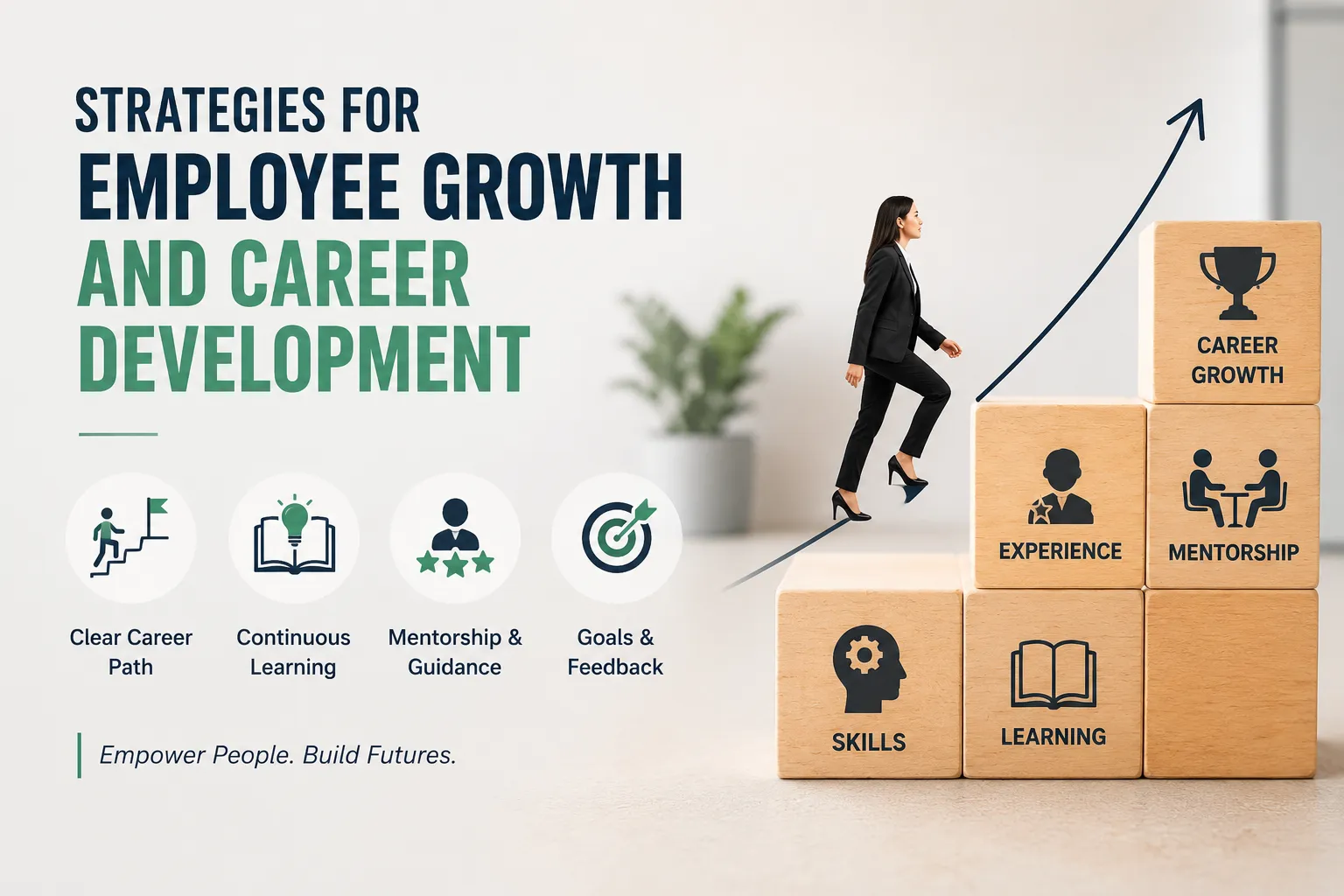
In today's rapidly evolving business environment, employee growth and career development have become strategic priorities rather than optional workplace initiatives. Organizations that actively invest in developing their people consistently experience higher employee engagement, improved productivity, stronger retention rates, and a more resilient workforce. Employees who see a clear path for advancement are more motivated to contribute, embrace new challenges, and remain committed to their organization's long-term success.
However, effective career development extends beyond occasional training sessions or annual performance reviews. It requires a comprehensive strategy that aligns individual career aspirations with organizational goals. By providing employees with continuous learning opportunities, personalized development plans, mentorship, coaching, and transparent career progression, businesses can create an environment where both employees and the organization thrive together.
This guide explores proven strategies that enable organizations to build a culture of continuous learning and professional growth. Whether you're an HR professional, business leader, people manager, or organizational decision-maker, you'll discover practical approaches for developing talent, closing skill gaps, and preparing employees for future leadership roles.
Why Employee Growth Matters
Employees are one of an organization's most valuable assets. Their knowledge, creativity, and expertise directly influence innovation, customer satisfaction, and overall business performance. As industries continue to evolve due to technological advancements and changing workforce expectations, organizations must continually invest in employee development to remain competitive.
A structured employee development strategy helps organizations:
- Increase employee engagement and job satisfaction.
- Improve retention by providing meaningful career opportunities.
- Build future leaders through leadership development programs.
- Reduce hiring costs by promoting internal talent.
- Prepare employees with the skills needed for changing business demands.
- Foster a culture of innovation, collaboration, and continuous improvement.
Organizations that prioritize employee growth are better equipped to adapt to market changes while maintaining a motivated and high-performing workforce.
Building Personalized Career Development Plans
Every employee has unique strengths, interests, and career aspirations. A one-size-fits-all development program rarely delivers meaningful results. Instead, organizations should create personalized career development plans that identify current competencies, define future goals, and establish actionable learning pathways.
An effective development plan should include:
- Individual career goals and aspirations.
- Current skills and competency assessments.
- Short-term and long-term development objectives.
- Learning resources and certification opportunities.
- Regular progress reviews and performance discussions.
- Clear milestones for promotion or role advancement.
Personalized plans empower employees to take ownership of their careers while giving managers a structured framework to support their professional growth.
Creating a Culture of Continuous Learning
Continuous learning is the foundation of sustainable employee development. As technologies, business models, and customer expectations evolve, employees must regularly acquire new knowledge and skills to remain effective.
Organizations can encourage lifelong learning by:
- Offering online learning platforms and training courses.
- Providing workshops, webinars, and industry certifications.
- Supporting cross-functional projects and job rotations.
- Encouraging knowledge sharing between teams.
- Allocating dedicated learning time during work hours.
- Rewarding employees who actively pursue professional development.
When learning becomes part of everyday work rather than an occasional activity, organizations build agile teams that adapt more effectively to change.
Conclusion
Employee growth and career development are essential drivers of organizational success. Companies that invest in learning, leadership development, mentoring, coaching, and career progression create more engaged employees, stronger leaders, and a workforce prepared for future challenges.
By implementing structured development strategies, fostering a culture of continuous learning, and aligning employee aspirations with business objectives, organizations can unlock their workforce's full potential. The result is a more productive, innovative, and resilient organization capable of thriving in an increasingly competitive business landscape.
Whether your goal is improving retention, developing future leaders, or building a culture of continuous improvement, investing in employee growth is one of the most valuable long-term strategies any organization can adopt.
Why Employee Growth Matters

Elevating Impact.
Defining Destiny
See how ZingHR's AI-powered Hire-to-ReHire platform frees your CPO to lead with purpose and deliver the outcomes your Board is watching for


Join over 2.8M active users

ZingHR is the AI-powered Hire-to-ReHire platform built for one purpose to remove every transactional layer of HR from your organisation, permanently.