Leadership & Organizational Excellence
Mastering Effective Leadership in Modern Organizations
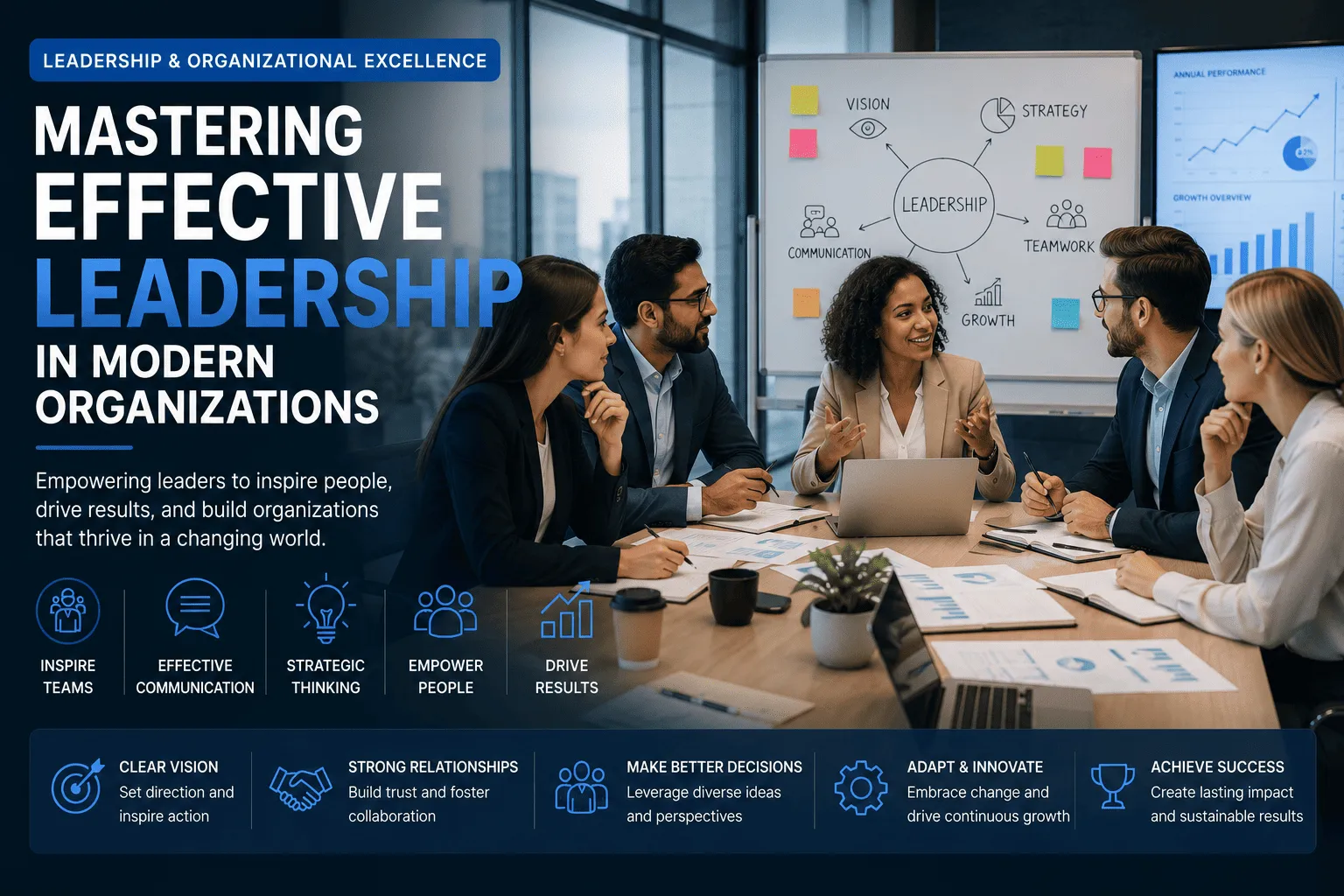
Mastering Effective Leadership in Modern Organizations
Leadership in today's rapidly evolving business environment requires far more than managing people and processes. Modern leaders must inspire teams, foster collaboration, embrace innovation, and make strategic decisions that drive organizational success. As industries continue to evolve through technological advancements and changing workforce expectations, effective leadership has become one of the most valuable competitive advantages.
Great leaders create a culture of trust, accountability, and continuous learning. They empower employees to contribute their best work while aligning individual goals with the organization's vision. By developing strong communication skills, emotional intelligence, and adaptability, leaders can successfully guide their teams through uncertainty and change.
This guide explores the key principles of effective leadership and provides practical strategies for developing leadership capabilities that strengthen teams, improve performance, and drive sustainable organizational growth.
Why Effective Leadership Matters
Strong leadership influences every aspect of an organization's success. It shapes workplace culture, motivates employees, improves decision-making, and helps businesses achieve strategic objectives. Organizations with effective leaders are more resilient, innovative, and better equipped to respond to changing market conditions.
Effective leadership helps organizations:
- Inspire and motivate high-performing teams.
- Build trust and strengthen workplace relationships.
- Improve communication across departments.
- Support innovation and continuous improvement.
- Increase employee engagement and retention.
- Guide organizations through change and uncertainty.
- Align teams around shared goals and vision.
Organizations that invest in leadership development create stronger teams and position themselves for long-term success.
Essential Leadership Skills for Success
Exceptional leaders continuously develop the skills needed to guide people, solve complex challenges, and inspire organizational excellence. Leadership is an ongoing learning process that combines technical knowledge with interpersonal and strategic capabilities.
Key leadership skills include:
- Clear and effective communication.
- Strategic thinking and decision-making.
- Emotional intelligence and empathy.
- Adaptability in changing environments.
- Conflict resolution and problem-solving.
- Coaching and mentoring team members.
- Delegation and accountability.
- Visionary leadership and goal setting.
Developing these skills enables leaders to build stronger relationships, improve collaboration, and create environments where employees can thrive.
Building High-Performing Leadership Teams
Successful organizations understand that leadership extends beyond individual managers. Building high-performing leadership teams creates alignment, encourages collaboration, and strengthens organizational performance across every department.
Best practices for developing leadership teams include:
- Foster a culture of trust and transparency.
- Encourage collaboration across departments.
- Invest in leadership training and development.
- Promote continuous learning and innovation.
- Provide regular coaching and constructive feedback.
- Empower leaders to make informed decisions.
- Measure leadership performance through meaningful goals.
- Recognize and celebrate leadership achievements.
Organizations that build strong leadership teams create a resilient workforce capable of navigating challenges while driving innovation and business growth.
Conclusion: Leading Organizations Toward Lasting Success
Mastering effective leadership is an ongoing journey that requires continuous learning, adaptability, and a commitment to empowering others. Leaders who communicate clearly, build trust, and inspire collaboration create workplaces where employees are motivated to perform at their highest potential.
As organizations face increasing complexity and rapid change, effective leadership becomes the foundation for innovation, resilience, and sustainable growth. By investing in leadership development and fostering a culture of accountability, collaboration, and continuous improvement, businesses can strengthen their competitive advantage and achieve long-term success.
Great leadership is not simply about directing people—it is about inspiring individuals, developing future leaders, and creating a shared vision that drives lasting organizational excellence.

Elevating Impact.
Defining Destiny
See how ZingHR's AI-powered Hire-to-ReHire platform frees your CPO to lead with purpose and deliver the outcomes your Board is watching for


Join over 2.8M active users

ZingHR is the AI-powered Hire-to-ReHire platform built for one purpose to remove every transactional layer of HR from your organisation, permanently.